
Feather Anatomy and Composition in Chickens: What a Feather Is Made Of
A feather is not one solid piece of “keratin.” This research review explains the shaft, barbs, barbules, follicle, and protein-rich corneous material that make a chicken feather work.
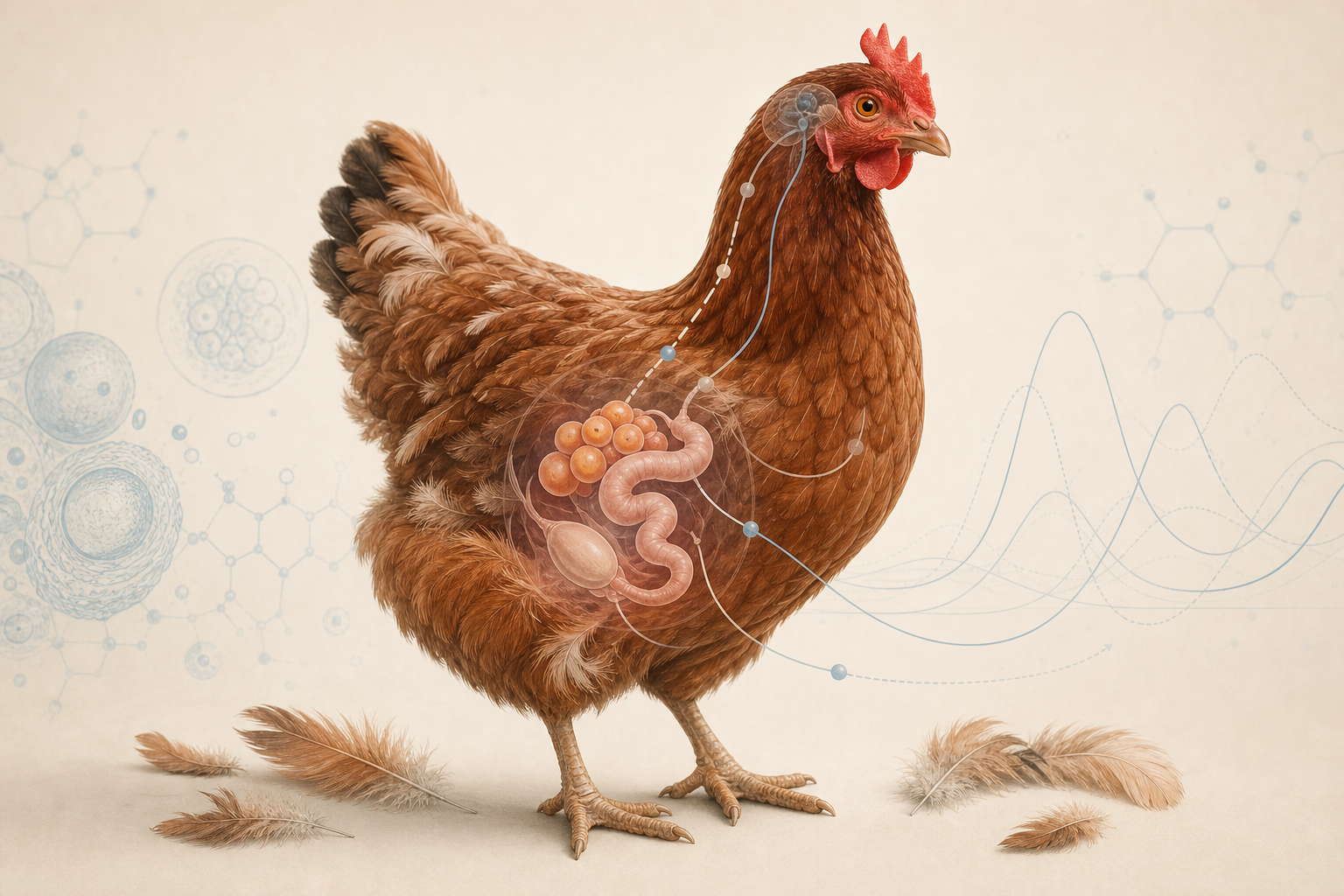
Reproductive Hormones During Molt: What Changes in Laying Hens?
During molt, egg production, ovarian activity, and reproductive hormone concentrations change together. This review separates normal endocrine physiology from claims made about induced molt.
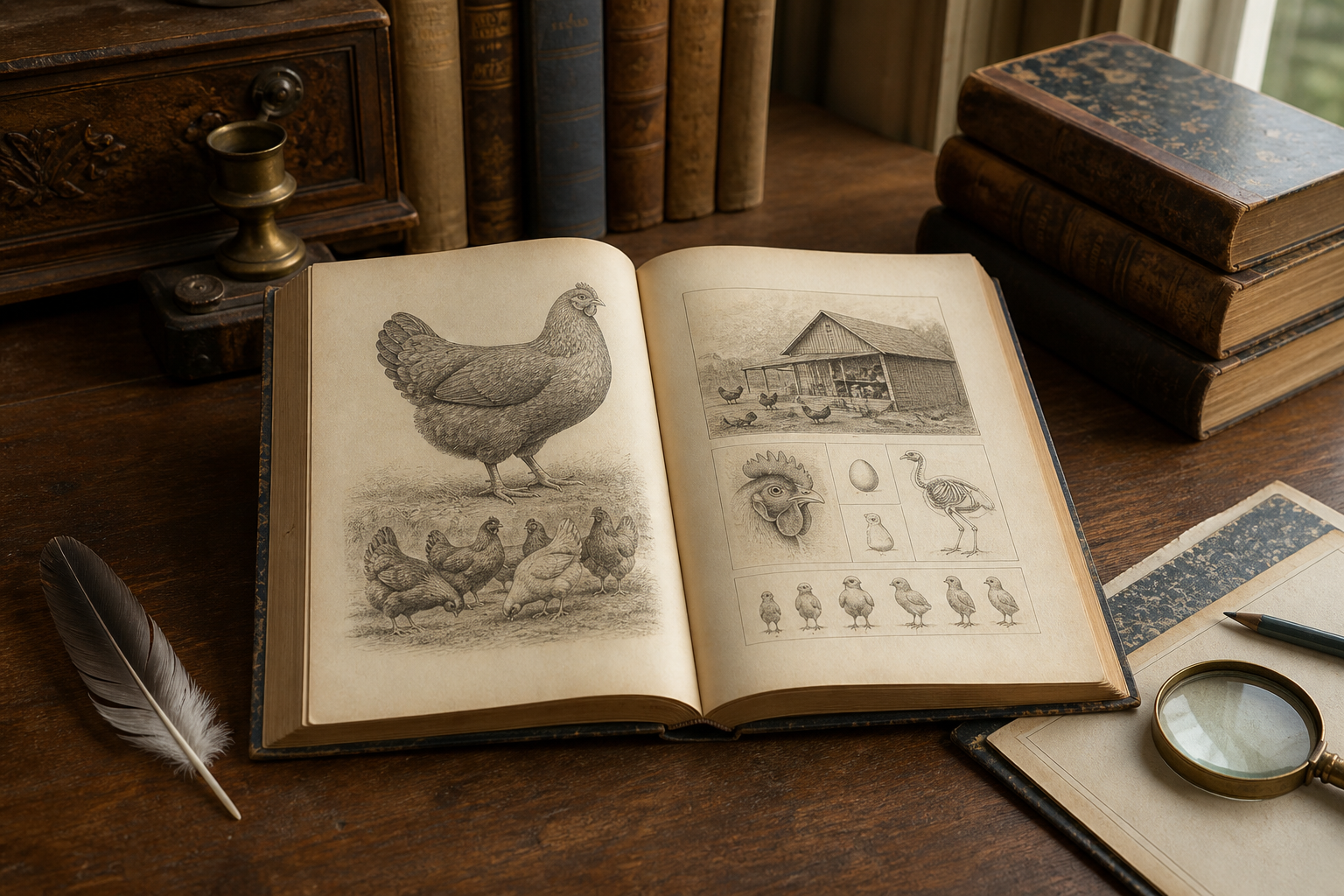
A 1913 Poultry Textbook on Feathers and Molt: What Holds Up—and What Does Not
John H. Robinson’s 1913 textbook contains sharp observations about feather structure, tracts, color patterns, and molt—but also terminology and conclusions that modern science has revised.
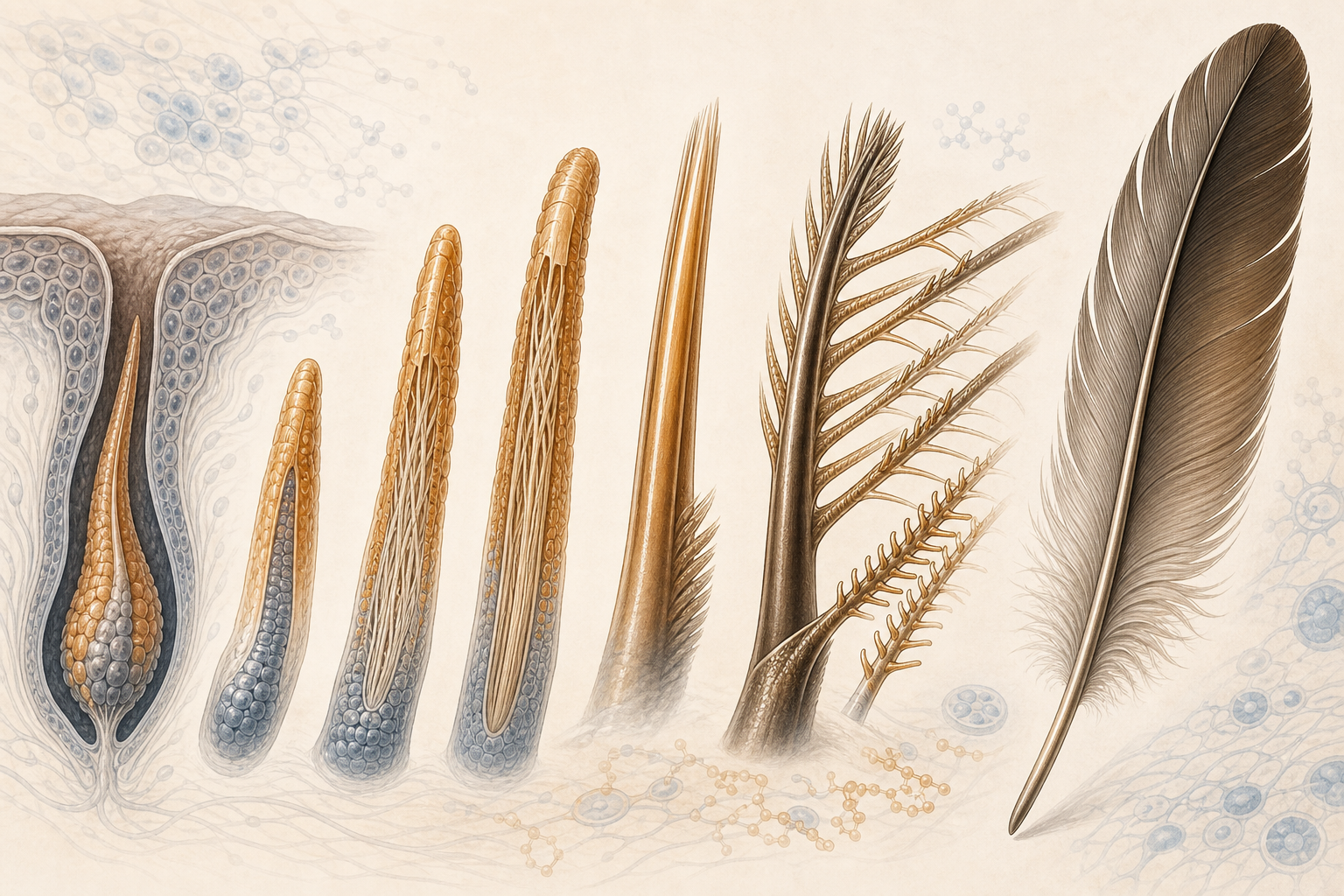
How Feathers Harden: Alibardi’s Feather-Protein Study Explained
Microscopy and antibody labeling show that developing feather cells begin with a small alpha-keratin scaffold that becomes coated by abundant feather corneous beta-proteins.
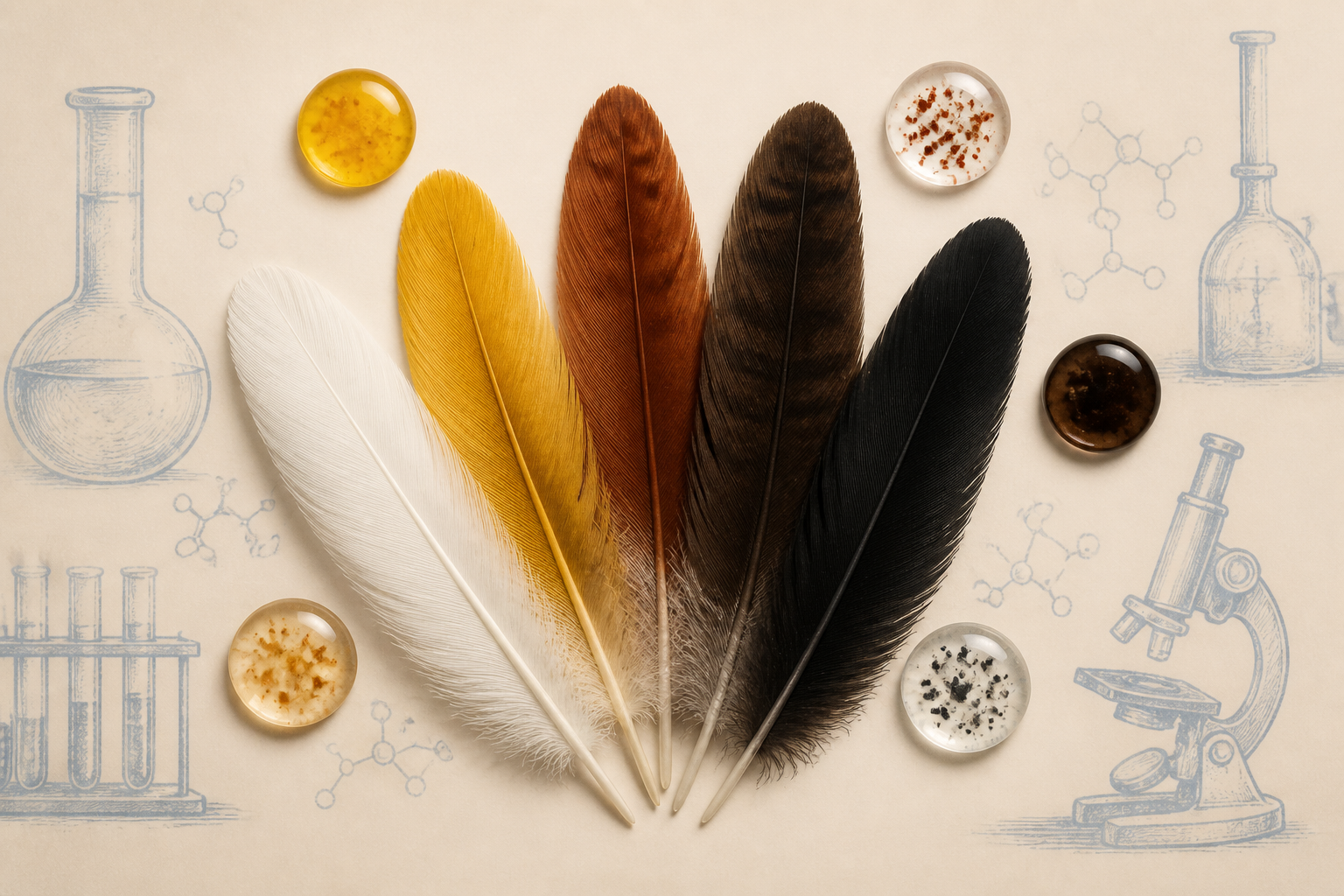
What Makes Yellow and Brown Feathers? A Chemical Pigment Study
Yellow does not automatically mean carotenoid, and brown does not identify one melanin. An HPLC study tested feather pigments chemically—including yellow down from two White Leghorn chicks.
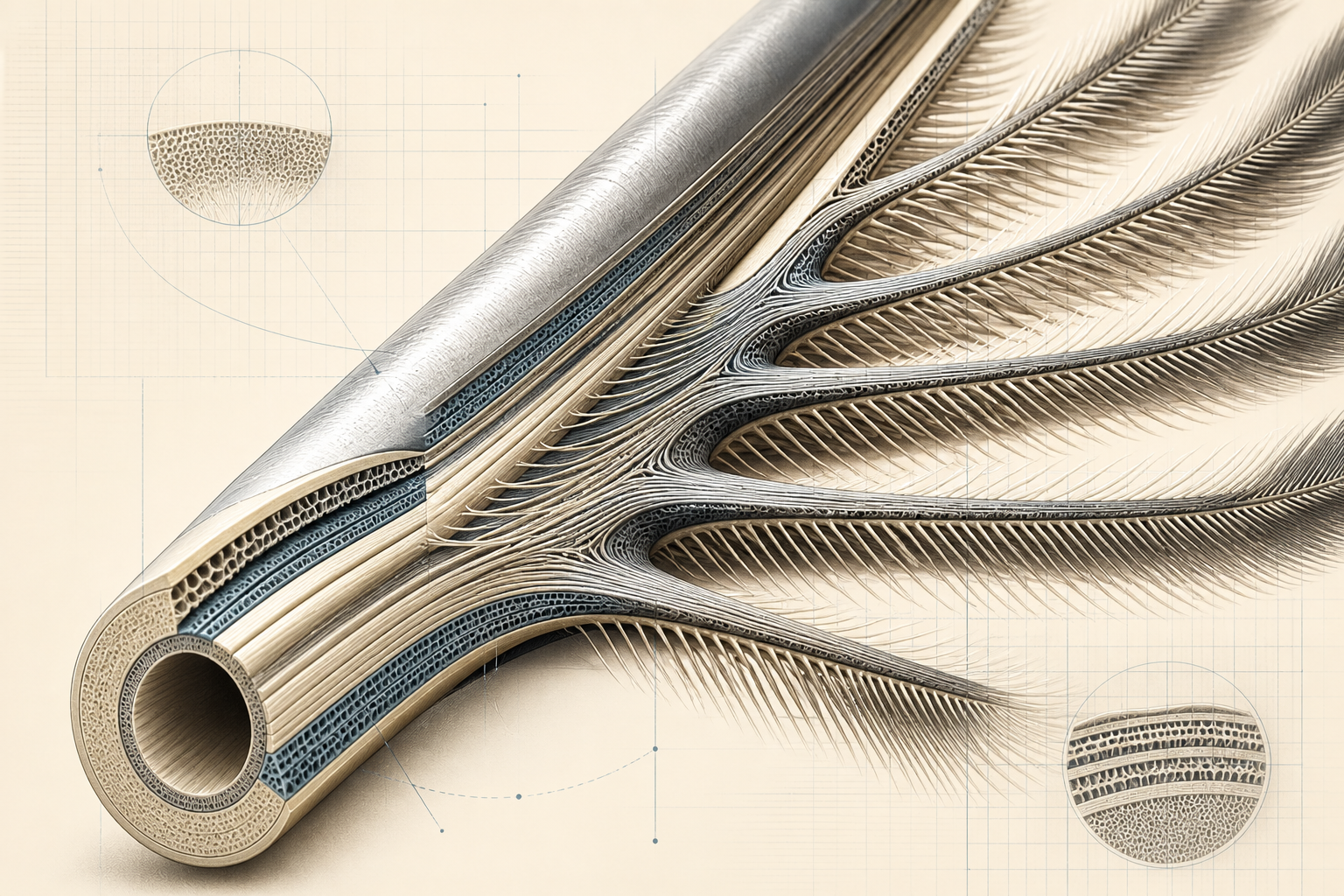
Inside the Feather Shaft: How Rachis Fibers Connect to the Barbs
Scanning electron microscopy revealed reinforcing fiber bundles that fan from the feather rachis into the barbs, suggesting a way to distribute load without leaving crack-forming fiber ends.
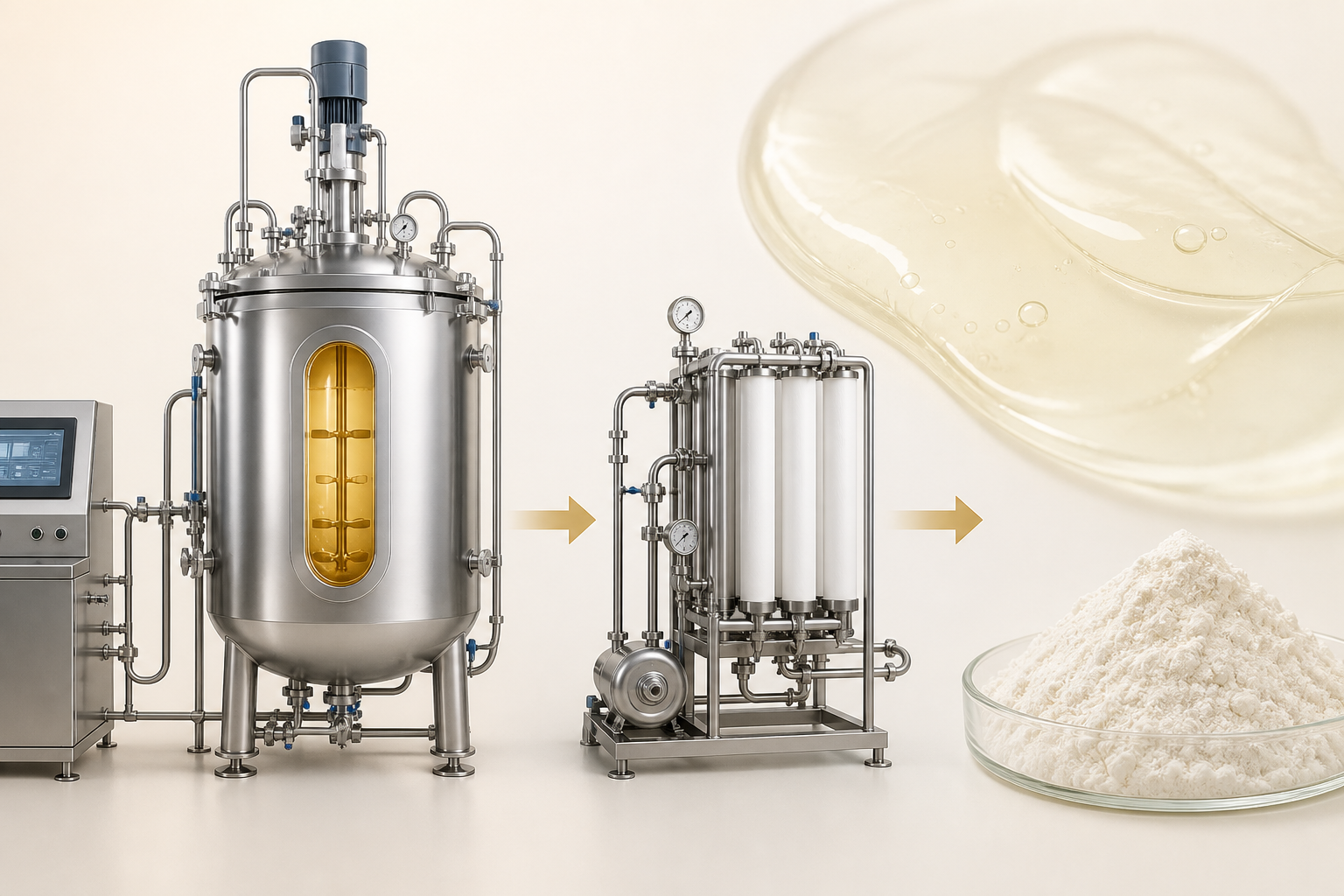
How Is OvoPro Made? A Research Review of Precision-Fermented Egg-White Protein
OvoPro is a precision-fermented ovalbumin ingredient made by engineered yeast—not a plant-based substitute or a complete egg. This review follows the science from gene design and fermentation through filtration, chromatography, drying, allergen labeling, and FDA’s GRAS response.
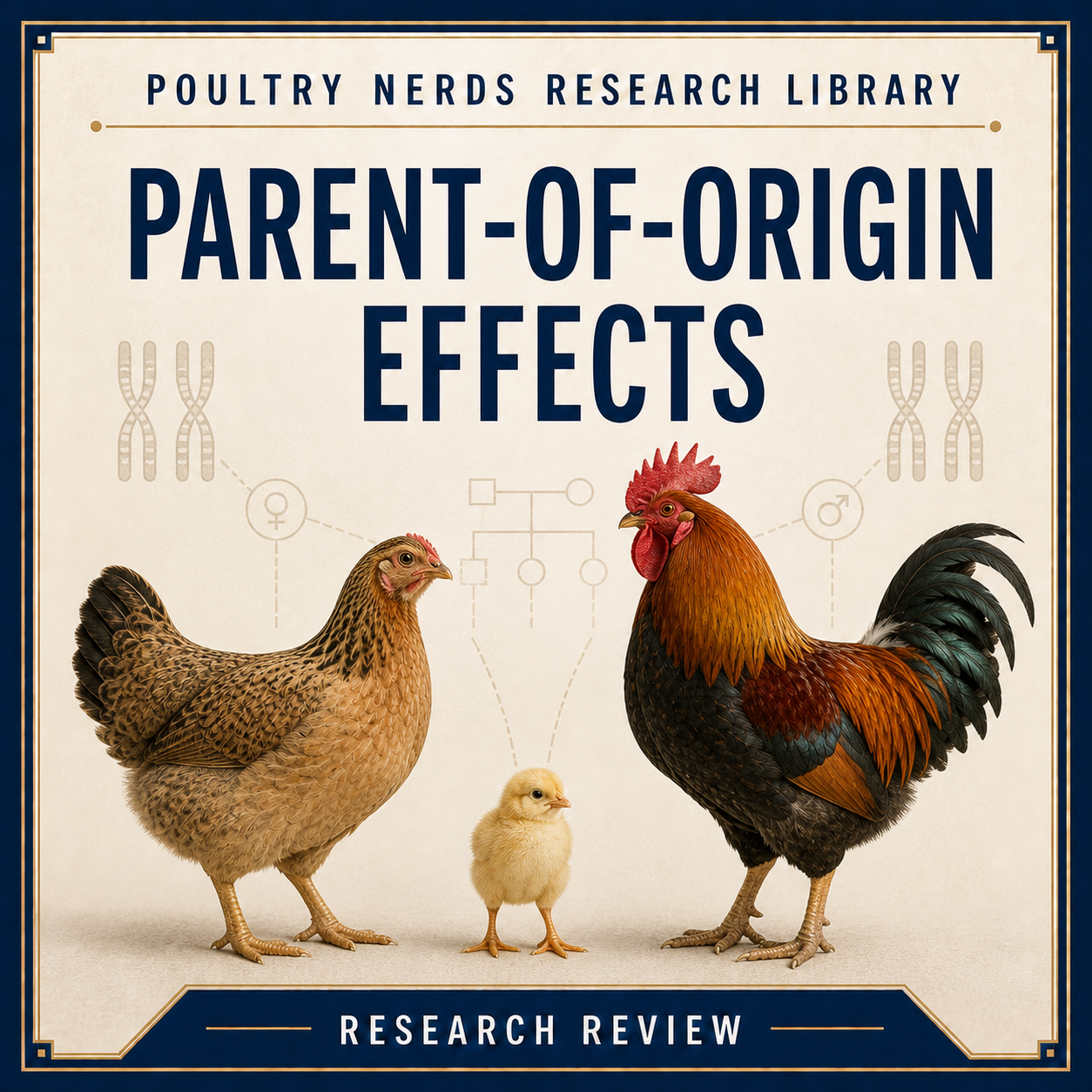
Parent-of-Origin Effects on Egg Production Traits in Chickens: A Research Review
Researchers discovered that several important production traits—including egg weight and egg production—were influenced by parent-of-origin effects that conventional genetic models failed to detect. This review explains what the study found and why it matters to poultry genetics.