THE SCIENCE BEHIND BETTER BIRDS
Genetics & Breeding
Understand the traits you see, the genes you cannot, and the breeding decisions that shape every generation.
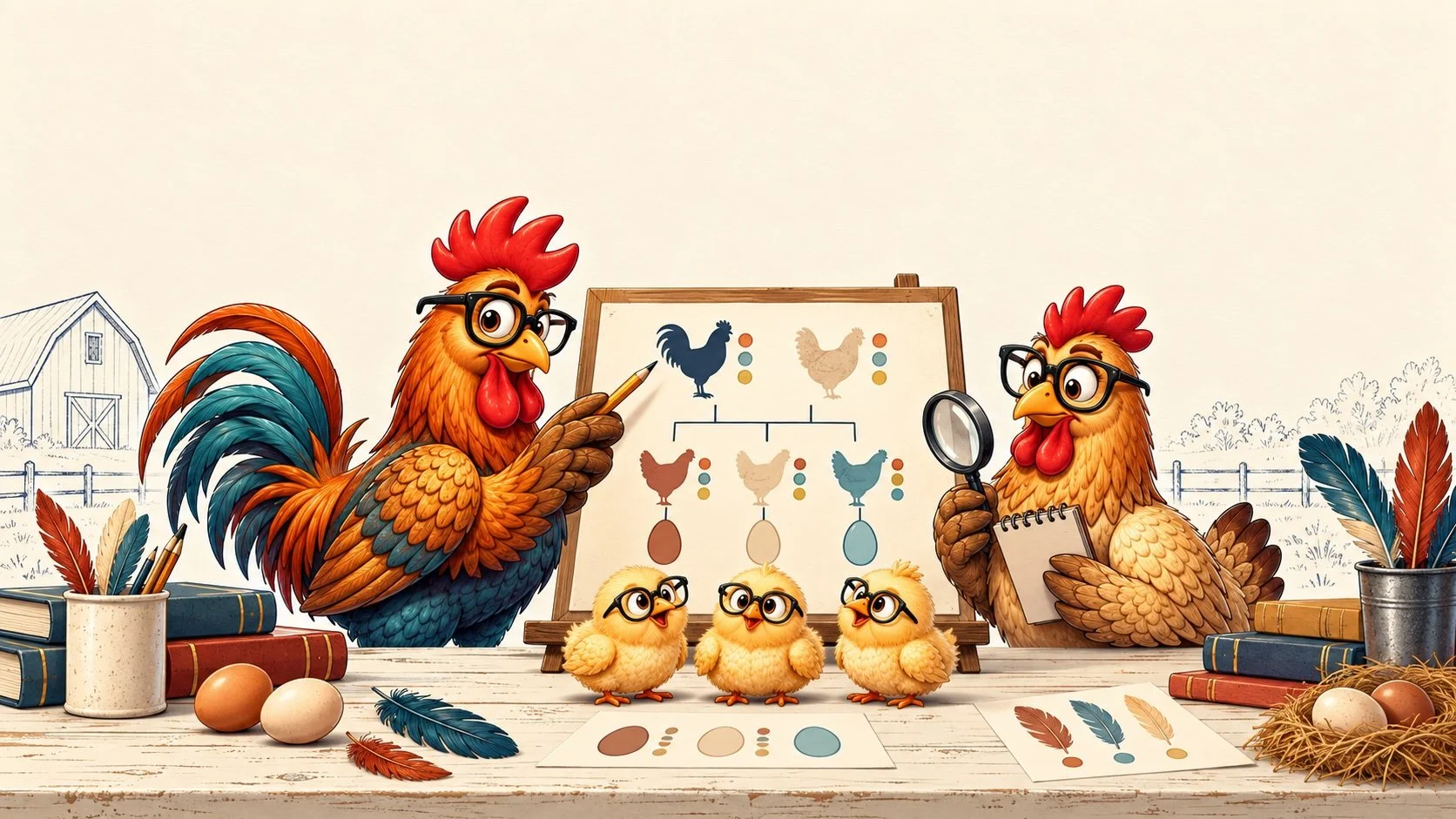
New to breeding? Start here.
You do not need to know big science words to get started. Learn what to look for in your birds, keep simple notes, and make one better choice with each new hatch.
-
A trait is something about a bird, like its size, feather color, or the eggs it lays. A gene is a tiny set of instructions a chick gets from its parents. Genes help shape its traits.
-
Each chick gets a different mix of genes from its parents. That is why chicks from the same pair may not look, grow, or lay exactly alike.
-
Pick one thing you want to improve. Write down which birds you paired, how many chicks hatched, and what those chicks were like. Use your notes when choosing the next pair.
-
Breeding means having a male and female bird produce chicks. If you choose the parents on purpose, you can work toward healthier birds or qualities you want. You cannot promise that every chick will turn out the same.
-
Phenotype is a science word for the traits you can see or measure in a bird—like its feather color, size, or egg color. It does not tell you every gene the bird has.
Genetics Made Clear
Traits, inheritance, phenotype, and the language breeders actually use.
Breed With Intention
Selection, records, breeding goals, and building consistency over time.
Egg Color & Quality
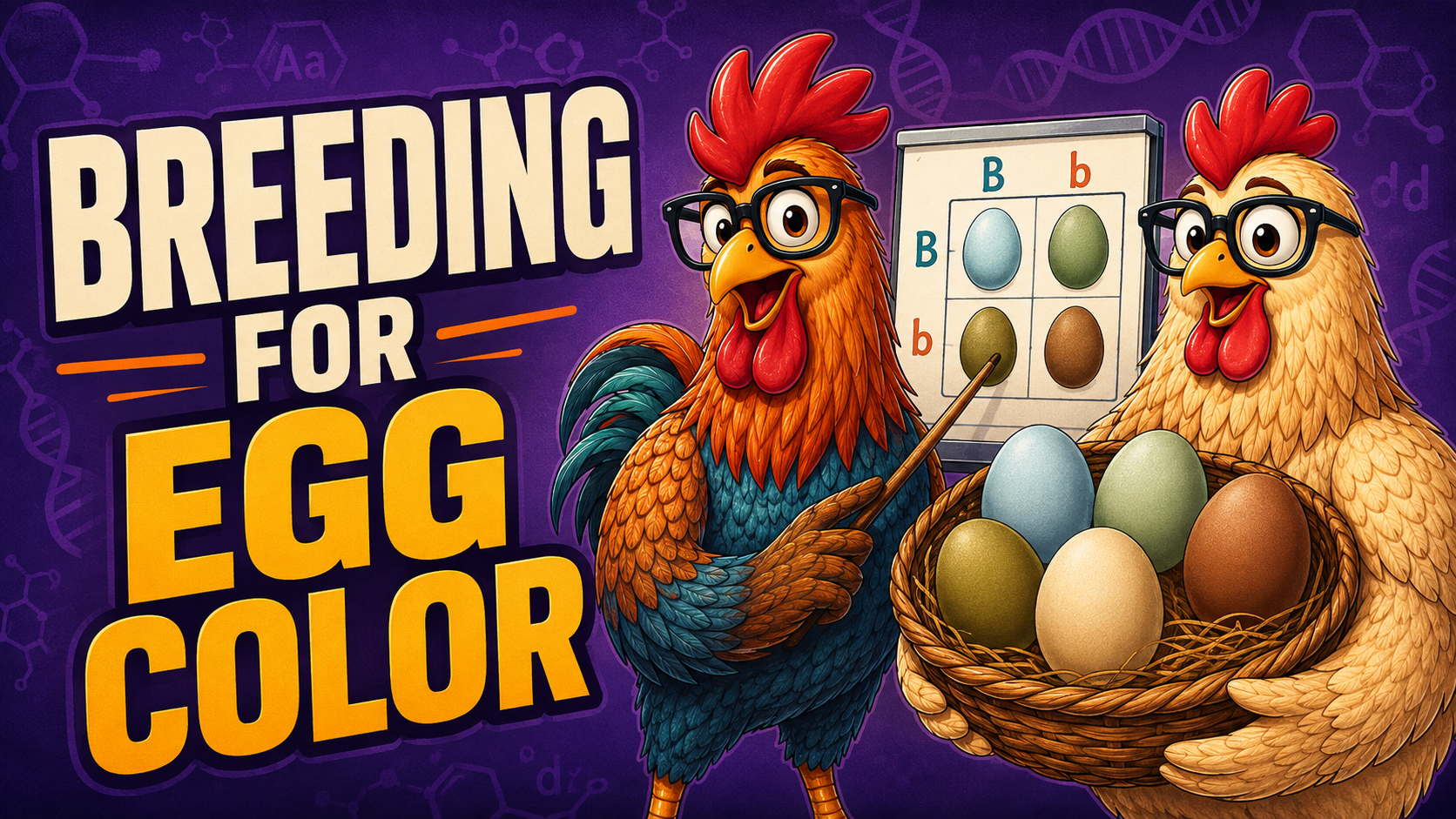
The genetics behind shell color, egg traits, and what breeding can—and cannot—predict.
Understanding genetics is not about memorizing every gene. It is about making better decisions: choosing breeders with intention, tracking what your flock carries, and selecting for the traits that matter most to you.
Listen to the genetics & breeding conversations
Go deeper into the science
Explore the research behind inherited traits, breeder selection, and the birds you raise. Then browse every genetics episode when you are ready for more.
Genetics, growth rate, activity, harvest age, and post-processing rest all affect chicken meat. Here is the science behind the differences between Orpington, American Bresse, and Cornish Cross chickens.