Poultry Biosecurity & Food Safety
Learn practical ways to prevent disease, reduce contamination, handle poultry safely, and protect both your flock and the people around it.
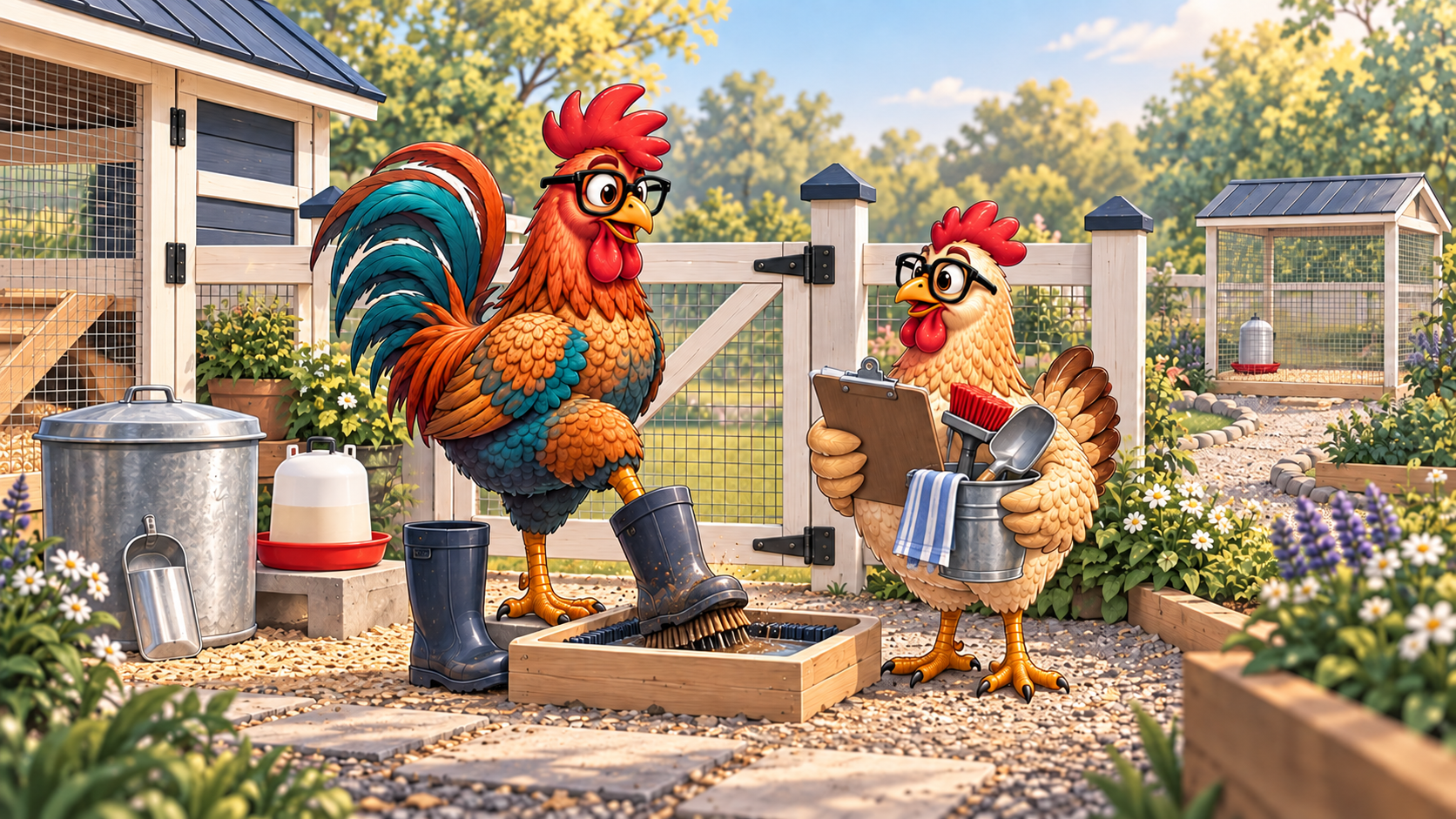
START HERE
What is biosecurity?
Biosecurity simply means keeping germs away from your birds—and keeping any germs your birds may carry from spreading to other animals or people.
You do that by controlling what comes into contact with your flock: new birds, visitors, shoes, equipment, wild birds, rodents, insects, feed, water, and dirty surfaces. It does not require turning your farm into a laboratory. It starts with a few repeatable habits.
Keep Germs Out
Quarantine new birds, limit unnecessary visitors, protect feed and water, and avoid carrying germs home on shoes or equipment.
Stop Germs From Spreading
Separate sick birds, clean shared equipment, control rodents and insects, and care for healthy birds before quarantined or sick birds.
Protect People Too
Wash your hands, supervise children, handle eggs and meat safely, and remember that a bird can carry germs while looking healthy.
PLAIN-LANGUAGE POULTRY TERMS
Words every poultry keeper should know.
You do not need a veterinary degree to protect your flock. Start by understanding the words you will hear in disease alerts, testing information, medication labels, and poultry conversations.
NPIP
The National Poultry Improvement Plan is a voluntary testing and certification program. It covers specific diseases and requirements; it does not mean a bird is free from every illness or parasite.
APHIS
The USDA Animal and Plant Health Inspection Service helps monitor, investigate, and respond to serious animal diseases and works with state animal-health officials.
HPAI
Highly Pathogenic Avian Influenza is a severe form of bird flu that can spread quickly and cause sudden illness or death in poultry. “Highly pathogenic” describes its effect on poultry.
Quarantine
Keeping new or potentially sick birds completely separate while you observe them. Separate equipment, footwear, feed, and airspace matter—not just a fence.
Zoonotic Disease
An illness that can pass between animals and people. Salmonella and some forms of avian influenza are examples connected to poultry.
Fomite
An object that carries germs from one place to another. Shoes, crates, incubators, tools, clothing, and vehicle tires can all become fomites.
Vector
A living creature that spreads disease. Rodents, flies, mosquitoes, wild birds, mites, and other pests can act as vectors.
Cleaning vs. Disinfecting
Cleaning removes dirt and manure. Disinfecting kills many remaining germs. Disinfectant cannot work properly through a layer of organic material, so clean first.
Withdrawal Period
The required time between giving certain medications and safely using eggs or meat for food. The correct period depends on the medication and how it was used.
Off-Label or Extra-Label Use
Using medication differently from its approved label. In food-producing birds, veterinary direction and a specific withdrawal period may be required.
PRACTICAL PREVENTION
A simple biosecurity routine.
You do not need expensive equipment. You need sensible habits that are easy enough to follow every day.
BEFORE THEY JOIN THE FLOCK
Bringing new birds home.
New birds can introduce illness even when they appear healthy. Quarantine gives you time to watch for symptoms before exposing the rest of your flock.
- Use a truly separate area whenever possible.
- Do not share feeders, waterers, tools, or bedding.
- Use separate shoes or clean them before returning to the main flock.
- Care for quarantined birds last.
- Watch eating, drinking, droppings, breathing, and behavior.
- Do not rush introductions because the birds “look fine.”
FEATURED EPISODE
I Just Got Some New Birds. Now What?
Learn why quarantine belongs in your plan, what to watch for, and why a separate pen is not always enough.
Listen to the Quarantine EpisodeEXPLORE BY TOPIC
Find the prevention question you need.
WHAT THE RESEARCH SHOWS
Start with approachable evidence.
These Poultry Nerds reviews explain important research in plain language and show where the evidence is strong, limited, or still developing.
Backyard Poultry Biosecurity
What recommendations work in real life—and why a plan must be practical enough for flock owners to follow.
Read the ReviewSalmonella in Backyard Chickens
Why apparently healthy birds may still carry Salmonella and what that means for households.
Read the ReviewWild Birds and Disease Risk
How shared feed, water, and spaces can connect backyard chickens with disease carried by wild birds.
Read the ReviewLATEST CONVERSATIONS
Keep learning about prevention and public health.
Explore practical conversations about biosecurity, zoonotic disease, quarantine, poultry processing, food labels, and the everyday choices that protect flocks and people.
Explore Food Safety & Public Health EpisodesSTAY CURIOUS
Keep Learning With Poultry Nerds
Get new episodes, research explainers, and practical poultry education delivered when it is useful.
Useful poultry education, not inbox clutter. Unsubscribe at any time.