The 2026 Poultry Nutrition Update: What Chicken and Quail Keepers Need to Know
For the first time since 1994, the National Academies has released a major update to its poultry nutrition recommendations.
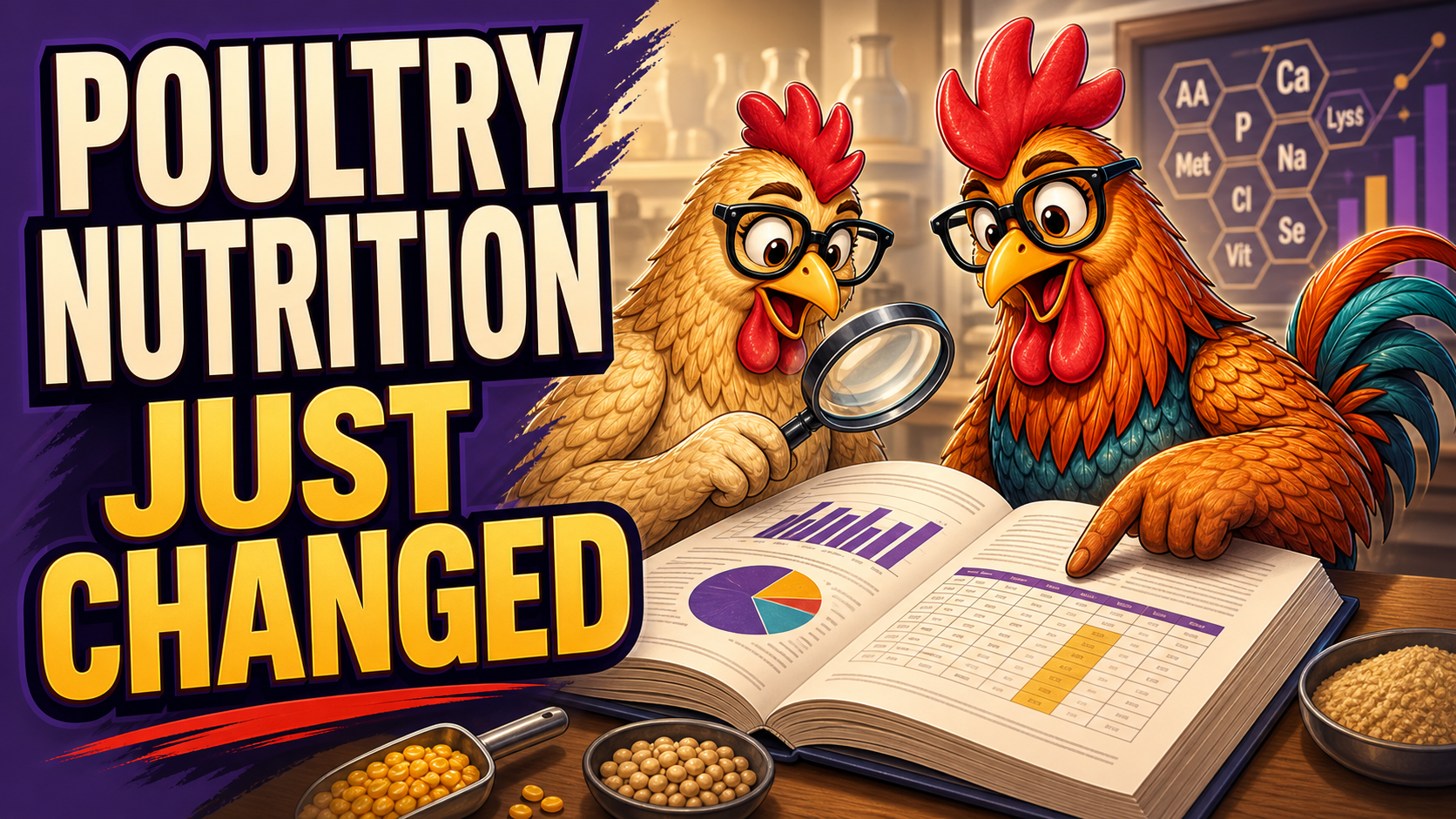
The new 424-page book, Nutrient Requirements of Poultry: Tenth Revised Edition, examines current research on poultry feed, nutrient requirements, digestibility, feed ingredients, environmental conditions, and the nutritional needs of different types of poultry throughout their lives.
That sounds like a book written for feed manufacturers and nutritionists—and much of it is. But it also reinforces several important lessons for backyard chicken keepers, quail breeders, exhibitors, and anyone producing hatching eggs.
The biggest takeaway is simple:
The protein percentage on a feed tag does not tell you everything you need to know about that feed.
Poultry Nutrition at a Glance
If you only have a minute, remember these points:
Crude protein is only one part of a complete poultry diet.
Amino-acid balance and nutrient availability matter.
Chickens, quail, ducks, turkeys, breeders, layers, and growing birds do not all have identical needs.
Breeder nutrition affects more than the adult bird—it also supports the egg and developing embryo.
Water, heat, housing, stress, and feed management influence how birds eat and use nutrients.
More protein is not automatically better.
Treats and supplements can dilute or disrupt an otherwise balanced feed.
Feed changes should be made gradually.
Always feed the birds you actually have—not an imaginary “average chicken.”
What Is the New Poultry Nutrition Book?
The National Academies’ Nutrient Requirements of Poultry is one of the primary scientific references used by poultry nutritionists, researchers, and feed formulators.
The new tenth edition updates recommendations from the ninth edition published in 1994. It reviews research involving energy, amino acids, fats, vitamins, minerals, water, feed ingredients, nutrient availability, environmental conditions, and the nutritional needs associated with different life stages and types of production.
It also considers how genetics and poultry production have changed during the past three decades. A modern commercial layer, a broiler, a heritage chicken, a breeding turkey, and a Coturnix quail are not doing the same job—and their nutritional needs should not be treated as interchangeable.
You can read the Tenth Revised Edition online or visit the official National Academies publication page for purchasing and publication information. The National Academies describes the report as an update to the 1994 edition that addresses poultry life phases, production types, digestible nutrients, ingredient variability, environmental effects, and feed management. (National Academies)
A Feed Tag Is a Starting Point, Not the Complete Answer
Most poultry keepers begin by looking at the crude protein percentage on the feed tag.
That number is useful, but it does not describe the entire diet.
Two feeds can display the same crude protein percentage while providing different ingredients, amino-acid profiles, energy levels, vitamins, minerals, and nutrient availability. The bird must be able to digest and use the nutrients—not merely consume them.
Protein is made from amino acids. Poultry need specific amino acids in the correct relationships to support growth, feather production, reproduction, egg production, and ordinary body maintenance.
This does not mean everyone should begin adding individual amino acids or supplements to commercial feed. Adding one nutrient without understanding the complete formula can create another imbalance.
It means crude protein should not be the only number considered when comparing feeds.
Visit our poultry feed-tag resource to see how different commercial feeds compare.
Feed the Bird You Have
There is no single perfect feed for every bird in every situation.
A bird’s needs can be influenced by:
Species
Age
Genetics
Growth rate
Egg production
Breeding workload
Molt
Activity level
Housing and stocking density
Temperature and weather
Health and stress
Access to forage
Feed and water intake
A confined laying hen is fully dependent upon the diet her keeper provides. A bird ranging over many acres may consume grasses, seeds, insects, and other foods in addition to its prepared feed.
That does not make free ranging nutritionally perfect, but it does change what is available to the bird. The more confined a bird is, the more important it becomes to protect the balance of its complete feed by limiting treats.
Breeder Nutrition Starts Before You Collect Hatching Eggs
A hatching egg must contain the resources needed to support an embryo throughout development.
The incubator supplies the environment, but it cannot replace nutrients that were missing when the hen formed the egg.
This is why breeder nutrition should be addressed before hatching eggs are collected—not after fertility or chick-quality problems appear.
If you are producing hatching eggs, consider:
Whether the diet is intended for maintenance, laying, or breeding
The condition and reproductive workload of both hens and males
Eggshell quality
Fertility and hatchability trends
Chick size, strength, and uniformity
Whether treats are replacing too much complete feed
Whether the flock has had enough time to respond to a nutritional change
Nutrition is not the only factor affecting hatch results, but it is one of the first places breeders should look when eggs consistently fail to produce strong chicks.
Learn more about breeder nutrition, egg selection, embryo development, and hatch management inside the Incubation Masterclass.
More Protein Is Not Automatically Better
When a chicken molts, looks rough, or becomes ill, one of the most common recommendations online is to increase protein.
That advice is incomplete.
Feathers contain protein, but feather growth also depends on amino-acid balance, energy, vitamins, minerals, genetics, health, and the natural timing of the molt. Adding cat food, dog food, fish feed, mealworms, or another high-protein food can disrupt the balance of a poultry ration.
A bird cannot rebuild an entire diet from one impressive number.
More is not always better. The goal is an appropriate, balanced diet for that bird’s species, age, and purpose.
For more about supporting birds through a normal molt, read Molting Matters: How to Support Your Flock Through the Molt.
Water and Environment Are Part of Nutrition
Feed does not work in isolation.
Birds need consistent access to clean, suitable water. Heat, cold, stress, crowding, disease, and housing conditions can change how much birds eat and drink. Those changes affect nutrient intake even when the feed itself has not changed.
During hot weather, birds often drink more and eat less. A beautifully formulated feed cannot help a bird that is not consuming enough of it.
Feed storage matters too. Dampness, heat, pests, and age can damage feed or allow mold to grow. If birds suddenly stop eating, lose condition, or fail to thrive, inspect the feed itself as part of the investigation.
Read more about mycotoxins in poultry feed and why they matter.
Do Not Make Abrupt Feed Changes
Even when you decide a different feed is a better choice, avoid replacing the old ration suddenly.
A rapid change can affect feed intake and digestion. Birds may reject a new texture, smell, or ingredient profile even when the new feed is nutritionally appropriate.
Mix the old and new feeds and gradually increase the proportion of the new ration. Watch feed intake, droppings, behavior, body condition, egg production, and overall flock response.
Change one major variable at a time whenever possible. If feed, supplements, housing, and water management all change together, it becomes difficult to know what helped—or what created a new problem.
A Practical Poultry-Feed Checklist
Before changing your birds’ diet, ask:
Is this feed formulated for the correct species and life stage?
Is it appropriate for what these birds are doing—growing, laying, breeding, molting, or maintaining?
Are the birds eating enough of the complete feed?
Are treats diluting the ration?
Is the feed fresh, dry, and stored properly?
Do the birds have constant access to clean water?
Have weather, stress, crowding, illness, or management changed?
Am I judging the feed by its formula and results—or by the appearance and marketing of the bag?
Can I make the change gradually?
Am I evaluating the birds I actually own?
For a deeper conversation about feed quality, cost, growth, and flock management, listen to Feed Quality and Pecking Order with Jeff Mattocks.
Poultry Nutrition FAQ
Did poultry nutritional requirements suddenly change in 2026?
The biology of poultry did not suddenly change. The new edition updates the scientific reference used to describe and predict nutrient requirements using research published since the previous 1994 edition.
Do I need to replace my current poultry feed?
Not necessarily. If your birds are healthy and performing well, do not make an abrupt change simply because a new reference book was published. Use the information to ask better questions and evaluate whether your current feed matches your birds and your goals.
Is a higher-protein chicken feed always better?
No. Crude protein alone does not describe amino-acid balance, digestibility, energy, vitamins, minerals, or overall suitability. Excesses can be as unhelpful as deficiencies.
Can I improve an inexpensive feed by adding supplements?
Possibly, but supplementation without understanding the complete formula can create imbalances. Adding treats or supplements may also reduce the amount of balanced feed the birds consume.
Does breeder nutrition affect hatchability?
Yes. The hen supplies the nutrients placed into the egg. Genetics, breeder health, male fertility, egg handling, storage, and incubation also matter, but an incubator cannot correct an egg that began with inadequate resources.
Does the new report include more than chickens?
The National Academies states that the report addresses different types of poultry and production, including broilers, laying hens, turkeys, ducks, and additional species where sufficient information is available. Species-specific interpretation remains important.
Can backyard poultry keepers read the book?
Yes. The full report can be read online through the National Academies. Printed and electronic editions are also available through the official publication page.
The Bottom Line
The new poultry nutrition recommendations do not give backyard keepers one magical feed formula.
They give us a better framework for understanding why nutrition is more complicated than the protein percentage printed on the bag.
Start with a balanced, species-appropriate feed. Protect that balance by limiting unnecessary treats. Provide clean water. Store feed properly. Consider the bird’s genetics, life stage, environment, and workload. Make changes gradually, and judge the results in the birds themselves.
Most importantly, do not feed the bag, the marketing, or the latest social-media trend.
Feed the birds you have.