How to Choose a Poultry Breeder: 10 Questions Every Buyer Should Ask
Quick Look
Buying birds or hatching eggs is about more than comparing prices or looking at pretty photos. A responsible breeder should be able to explain their breeding goals, nutrition program, egg-handling methods, shipping practices, and customer support.
In this guide, we’ll walk through ten questions to ask a breeder before placing an order. These questions can help you evaluate breeders fairly, set realistic expectations, and choose someone who inspires confidence.
Why Choosing the Right Breeder Matters
The breeder you choose can influence nearly every part of your experience, from the condition of the eggs or birds you receive to the traits that appear in the next generation.
Genetics matter, but genetics are only part of the picture. Breeder nutrition, flock health, housing, recordkeeping, egg handling, shipping methods, and communication can all affect your results. Even excellent genetics can be undermined by poor management. Likewise, beautiful birds do not automatically come from a carefully planned breeding program.
Honesty matters too. No reputable poultry breeder can guarantee that every shipped egg will hatch, every chick will mature perfectly, or every bird will become a show winner. What a breeder can do is explain their process, describe what they are working toward, and help you understand what is—and is not—within their control.
If you are wondering how to choose a poultry breeder, begin by asking questions that reveal the breeder’s knowledge, priorities, and willingness to communicate.
Question 1: How Long Have You Worked With This Line?
Time alone does not make someone a good breeder, but experience with a particular line provides valuable context.
A breeder who has worked with the same line for several generations should be familiar with its strengths, weaknesses, fertility patterns, temperament, growth, and consistency. They may also be able to explain how the line has changed under their care.
Do not dismiss a newer breeder automatically. Everyone begins somewhere, and a thoughtful new breeder may have excellent stock, strong mentors, and a clear plan. The important question is whether the person understands the birds they are offering and can speak honestly about their experience.
Listen for specific answers. “I have had this breed for five years, but this particular line for two” tells you more than a vague claim about decades of poultry experience.
Question 2: What Are Your Breeding Goals?
A good breeder should have a reason for pairing particular birds.
Some programs prioritize exhibition qualities and breed-standard traits. Others focus on egg production, meat qualities, temperament, color consistency, hardiness, or practical homestead performance. Quail breeders may select for traits such as body size, egg production, feather color, growth rate, or disposition.
There is no single correct goal. What matters is whether the breeder’s goals align with yours.
If you want exhibition prospects, a breeder focused primarily on egg production may not be the best match. If you want hardy layers for a backyard flock, you may not need birds from a highly specialized show program.
When choosing a chicken breeder or deciding how to choose a quail breeder, ask what the breeder is trying to preserve or improve. Their answer should show intention rather than simply describing whatever birds happen to be available.
Question 3: What Do You Feed Your Breeders?
Nutrition affects breeder condition, fertility, egg quality, embryo development, and the health of newly hatched chicks.
Ask whether the breeder uses a complete feed designed for breeding birds and whether the ration is appropriate for the species, age, and production stage. Treats, scratch grains, and supplements can have a place in flock management, but they should not displace a balanced primary diet.
The best answer is not necessarily the name of a particular brand. You are listening for evidence that the breeder understands why nutrition matters and has chosen a feeding program intentionally.
At Poultry Nerds, we developed Show Pro for poultry keepers who want purposeful nutrition for birds expected to look, perform, and reproduce at their best. Whatever feed a breeder uses, they should be able to explain how it supports the condition and reproductive needs of the flock.
Question 4: How Are Hatching Eggs Collected, Stored, and Shipped?
When buying hatching eggs online, handling practices matter.
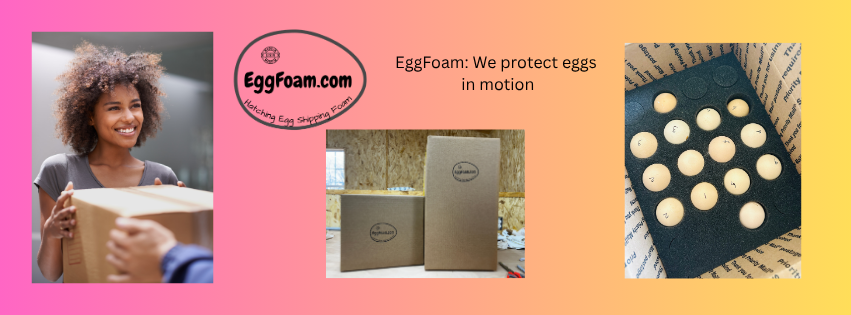
Ask how frequently eggs are collected, how they are stored before shipment, and how old they are when mailed. A breeder should also be able to explain how eggs are inspected and packaged. Most breeders avoid sending eggs that are cracked, excessively dirty, unusually shaped, or otherwise unsuitable for incubation.
Shipping introduces variables that neither the buyer nor breeder can fully control. Temperature extremes, vibration, delays, rough handling, and changes in air pressure can affect hatchability—even when eggs are fresh and carefully packed.
A responsible breeder will explain these risks rather than promising a guaranteed hatch rate. They should also provide clear information about shipping days, tracking, and what to do when the package arrives.
Looking for additional sources? The Poultry Nerds Hatching Egg Directory can help you discover breeders while giving you a starting point for your own research. A directory listing is not a substitute for asking questions, but it can make the search easier.
Question 5: What Support Do You Provide After the Sale?
A breeder’s responsibility does not necessarily end when a box leaves the farm.
Support may include incubation guidance, arrival instructions, basic care information, help interpreting unexpected results, or answers to reasonable questions about the line. The exact level of support varies, especially between small hobby breeders and larger hatcheries, so clarify what is included before ordering.
Good support does not mean unlimited access or an automatic replacement whenever something goes wrong. It means the breeder communicates expectations clearly and responds professionally when a legitimate concern arises.
Ask how the breeder prefers to be contacted and how quickly buyers can generally expect a response.
Question 6: Do You Keep Breeding Records?
Records help breeders make decisions based on more than memory.
Depending on the program, records might include pedigrees, mating groups, hatch dates, fertility, hatch rates, growth, egg production, health observations, exhibition results, or notes about faults and strengths. A small breeder may use a notebook, while a larger operation may use specialized software. The format matters less than the habit of tracking useful information.
Not every poultry breeder maintains complete pedigrees for every bird. That is not automatically a red flag. However, someone making detailed claims about bloodlines, production, or performance should have a reasonable basis for those claims.
Recordkeeping shows that breeding decisions are being evaluated over time.
Question 7: What Expectations Should I Realistically Have?
This may be one of the most revealing questions to ask a breeder.
An honest breeder will discuss both possibilities and limitations. They may tell you that a particular pairing can produce variation, that not every offspring will meet the breed standard, or that shipped eggs commonly hatch at a lower rate than eggs incubated on the breeder’s property.
They should also distinguish between breeding potential and guaranteed outcomes. A chick from exceptional parents still needs proper nutrition, housing, health management, and time to develop. Genetics create possibilities; they do not eliminate variation.
Be cautious when every answer sounds like a promise. Responsible breeders leave room for biology to be biology.
Browse by breed and species. Leave reviews for others!
Question 8: Can You Explain Your Replacement Policy?
Read the breeder’s replacement and refund policy before sending payment.
The policy should explain what happens if birds arrive in poor condition, a shipment is delayed, eggs are damaged, or a package is lost. It should also state whether the buyer must provide photographs, video, shipping labels, or other documentation within a particular period.
For hatching eggs, many breeders guarantee safe arrival but not hatch rates. This is understandable because incubation equipment, storage after delivery, handling, and postal conditions are outside the breeder’s control.
A strict policy is not necessarily unfair if it is presented clearly before purchase. Problems arise when policies are vague, hidden, or changed after a customer raises a concern.
Question 9: Can You Explain Your Biosecurity Practices?
Biosecurity helps reduce the risk of introducing or spreading disease.
Ask whether new birds are quarantined, how equipment and housing are cleaned, and whether visitors have access to breeding areas. A breeder may also discuss pest control, flock separation, health monitoring, testing, or participation in programs such as the National Poultry Improvement Plan, commonly known as NPIP.
Breeders have different facilities and risk levels, so their procedures will not all look identical. What matters is that they recognize disease risks and take deliberate steps to manage them.
No biosecurity program makes a flock invulnerable. A thoughtful answer should reflect ongoing prevention rather than claiming that disease could never occur.
Question 10: Can You Explain Why You Selected These Birds?
This question brings the entire conversation together.
A breeder should be able to explain why the sire and dam—or the birds within a breeding group—were selected. Perhaps one bird has excellent structure while another improves color. One may contribute size, production, temperament, or a trait the breeder wants to strengthen.
You are not looking for a flawless bird. Flawless birds do not exist. You are looking for evidence that the breeder sees both strengths and weaknesses and makes pairings with a purpose.
Statements such as “These are my prettiest birds” offer little insight. A detailed explanation of how two birds complement each other suggests a more intentional breeding program.
Green Flags When Choosing a Poultry Breeder
A strong breeder communicates clearly without pressuring you to buy. They answer reasonable questions, provide written policies, and distinguish facts from predictions. This matters because poultry breeding involves variation. Someone who can discuss uncertainty honestly is more trustworthy than someone who guarantees perfect outcomes.
Detailed knowledge of the breeder’s own birds is another encouraging sign. They can explain where their line came from, how long they have worked with it, what traits they value, and what they still hope to improve. This shows that the flock is part of an ongoing program rather than simply a source of inventory.
Good breeders also present their birds accurately. Their photographs are recent, their descriptions are specific, and their marketing does not depend on exaggerated claims. They are willing to show mature breeding stock when appropriate and do not imply that every offspring will look exactly like the best bird pictured.
Clear care, shipping, and replacement information is equally important. Written expectations protect both parties. When customers understand the risks of shipping live birds or hatching eggs before purchasing, misunderstandings are less likely.
Finally, a good breeder may ask questions about you. They might want to know whether you have suitable housing, understand incubation, or have experience with the species. That is not necessarily gatekeeping. It can indicate that the breeder cares where the birds go and wants buyers to succeed.
Red Flags to Consider Carefully
Be cautious when a seller cannot explain what they are breeding toward. Owning purebred or unusual poultry does not automatically make someone a breeder. If there is no selection process, recordkeeping, or understanding of the birds’ traits, the offspring may be far less predictable than the advertising suggests.
Promises of guaranteed show winners, perfect offspring, or exceptional hatch rates should also be approached carefully. Even thoughtful pairings can produce a range of outcomes, and shipped eggs face risks outside the breeder’s control. Overconfidence may indicate inexperience or marketing that is running ahead of reality.
Vague or missing policies deserve attention. If you cannot determine what happens when eggs arrive broken, birds are delayed, or a shipment has a problem, ask before paying. A breeder does not need to offer replacements in every situation, but the terms should be clear and consistent.
Pay attention to communication as well. A delayed reply is not automatically a red flag—many small breeders also have jobs, families, and farms to manage. A repeated pattern of avoiding straightforward questions, changing explanations, or responding aggressively to polite concerns is more meaningful.
Unusually low prices may deserve additional investigation, but high prices are not proof of quality either. Price can reflect rarity, feed costs, testing, labor, reputation, or demand. It can also reflect marketing. Evaluate the complete breeding program rather than assuming that the cheapest or most expensive option must be best.
Final Thoughts
Price should never be the only question when choosing a poultry breeder.
A lower purchase price can become expensive if you receive poorly packed eggs, birds that do not match their description, or no support when something goes wrong. At the same time, a higher price does not automatically guarantee better genetics or service.
Compare breeders based on their goals, experience, nutrition, management, honesty, policies, and communication. Then ask yourself one final question:
Does this breeder inspire confidence?
The right breeder cannot promise a perfect outcome. They can give you accurate information, make thoughtful decisions, set realistic expectations, and treat you fairly throughout the process.
-
Jennifer 1:05
Today, we're talking about what actually separates a beginner from an experienced person that everyone recommends Yeah Cause everybody wants premium birds, premium eggs I saw to- today, I think the post was done originally yesterday, but I read it today. They were talking about prices for a dozen hatching eggs.
Carey 1:27
And somebody says, "I wanna know what kind of job people have that pay $300 for a dozen of hatching eggs." I w- I wanted to be like, The same job that every Tom, Dick, and Harry has that has something that they want." If you have something that's special, which would be like a top breeder with exceptional birds-
Jennifer 1:48
and people want it- they will pay for it. It don't matter if they work at McDonald's, they'll figure out a way. Yep. That is a true statement. Everybody wants primo. It's called value. It's valuable to somebody, so they will pay for it. And I look at it like this. You know, if, let's say you wanted to work with Orpingtons, the buff variety.
Carey 2:09
Would I go to Tractor Supply and get me some buffs and cull heavily and spend the next 7 to 10 years probably to get what I need, what I should have? Or do I cut off absolute minimum of five years worth of feed bills, time, effort- Frustration. And just pay the money. You're paying the money either way.
Jennifer 2:38
If you go b- you can go back to a podcast that we did a while back where we actually did a podcast on how to start, and we compared some of the prices of starting with, expensive hatching eggs, a, a started trio or pair, and so on and so forth. And I think started birds was a great amount less expensive than the $300 dozen of eggs Yes, if you can get chicks out of those eggs, and that's where the experienced seller comes into play.
Carey 3:10
Yeah. Yeah. So just because somebody's charging high prices doesn't mean that those eggs are worth those high prices. No. And just because somebody doesn't have a fancy website and sells their eggs cheap doesn't mean they're not worth 10 times that. Yeah. I've also learned that because I have seen people that don't know their rear end from a hole in the ground, but they've got some birds from somebody, and they think that they're still the same thing, so, "Well, I'm just...
Jennifer 3:41
250 a dozen." And people think, "Okay. Well, he got his birds, or she got her birds from so-and-so five years ago, and that's why they're cheaper even though they're that much than when you get them directly from so-and-so." Well, number one, I hate to say it, but 30 days after a bird leaves the farm, it's no longer the original owner's bird, cause they ain't feeding it the same, it ain't being cared for the same Ain't none of it the same So there's a couple things I would like to say about this topic before we actually get into the topic.
Carey 4:12
There are some big personalities on social media who have birds that they order in the fall from big name hatcheries, and those birds are then laying by s- early spring, early winter. And then they sell hatching eggs for premium pricing because they have a big following. We know a few of those.
Jennifer 4:39
We do know of a few of those people. I shake my head because there's nothing technically wrong with that. If you go back far enough, you'll see that they have been honest about what they're doing. The problem is, is that people only see the number of followers that a person has, and assumes that the birds are worth their salt.
Carey 5:04
Now, while we're on that subject- remind me again how you spell assume
Jennifer 5:09
I was taught that at a very young age. And, you know, now I'm, I'm knocking on 50 and I haven't seen too many times where that's actually been wrong. So- So there are- Use, use your brain once you have settled, i- if you want to really breed now maybe a bunch of you listening don't even care, but those of you that really want to get to the nitty-gritty, the details, and really track and understand your breed and make it better and create something because you love it, not because it commands a larger price tag you will find most of the long-term breeders probably aren't even on social media.
Carey 5:53
Or if they are, like their most recent post is probably something funny. And got Jack to do with a chicken. And then they don't have fancy websites. They don't have big followings. They don't, those, they're gonna have grandkids. They're gonna have Those are the people that you need to talk to.
Jennifer 6:12
Okay? So- There's actually one that comes to mind. I have several. And you would not know this, this particular person, you would not know that they were even a chicken person if you do not pay very close attention to the building and the way it's laid out in their Is that your, whatever the poster thing is behind your picture on your social media, like a header page or something.
Carey 6:36
Yeah. 'Cause they just, like you said, grandkids. Not even needing pictures of themselves. But this person is, I have been told by a couple people, one of the best breeders of that person's particular breed of chicken that they work with. And we also see those older people who have spectacular birds just be bullied into nothingness out of the social media personalities.
Jennifer 7:01
We I have one that comes to mind. Um, she actually has sold out now, and w- I haven't even seen her on social in a long time. Of course, I'm pretty much off. I'm over the... I'm over it. So I am, um, pretty much off of it. So let's, you might actually get into the topic now that we're getting off our soapbox.
Carey 7:19
You know what? Why not? Okay. Why not? So we're gonna be talking about finding a responsible breeder that you actually want to buy from. So some things that you can look for, if they have a website, would be clear product descriptions. Nothing really vague really wordy. I've seen some that say, "I have the best ever Pharaoh hatching eggs."
Jennifer 7:45
Well, that is pretty generic. Honest availability. You know, they're giving you their timelines. They're honest about when they can ship, how far behind they are, not behind. You know, there's clear shipping windows. A realistic hatch rate language that would be like hatch rate guarantees. There are some people out there who do hatch rate guarantees.
Carey 8:09
I'm not saying that what they're doing isn't right because the person that's coming to mind that does it, he ships so many extra eggs that you're gonna get at least that many to hatch. Um, so that's one way to make sure that somebody gets what they order and I find that perfectly respectable.
Jennifer 8:28
You know, he's wanting to make sure his customers get what they're paying for. Right. But if somebody says, you know, I, I, 100% fertility and my hands are off once it leaves m- my possession, i, I mean, I'm tired of really... I'm honestly just tired of hearing that. It's not an acceptable sentence in my book, honestly.
Carey 8:49
I mean, I'm, I, I have quail, and hatching my own, I don't have 100%. How am I gonna say this? M- well, I guess we're not overly politically correct on here, so I'm just gonna say it. If I know my fertility, let's just talk about my turkeys for a second, 'cause I actually got to ship quite a few turkey eggs this year before they went broody.
Jennifer 9:06
Mm-hmm. I knew that they were running right around 80% fertility. So that's, um, one in five is not gonna be fertile, right? So if somebody ordered six eggs, I shipped them eight, so 80% would be fertile and get what they bought, right? Does that make sense? Yeah. Did I say that right? Yeah. So I shipped extra eggs to make sure that they got at, that I knew that what they ordered was gonna be fertile.
Carey 10:20
Does that make sense? Okay. I mean, yeah. That's, that's above and beyond to me because there's a lot of folks out there that charge a very handy premium and they don't do any extras. So that is a question to ask somebody. I had somebody reach out to me, um, in the last month. The, the conversation was basically a month long, and she had ordered $300 eggs.
Jennifer 10:43
Mm-hmm. And she was shipped 12 eggs in an egg carton. In a box All right, so let me tell you this And I sent you pictures. I'm not lying, am I? No. I am guilty of doing very expensive eggs. That happened to me. I did that. But let me tell you how this guy shipped them I thought I was gonna get some eggs.
Carey 11:05
Maybe in foam, you know, maybe this, maybe that, all kinds of different things. So I get a phone call from the post office, and I'm like, "Hey, I haven't ordered anything lately." And she says, "Um, well, it has your name and your number on it, and it's in a box, but I don't hear any noises." And I said, What?" Yeah, it's in a box like you would ship a live bird in, but I don't hear noises."
Jennifer 11:33
I ordered a dozen eggs." So the curiosity in me goes to the post office to see what I've got, and this man packaged them very well and put them in a live shipper box and shipped them that way And I was, I'm not gonna lie, I was kinda impressed. Because postal service thought it was a live animal, so they didn't throw it across the floor.
Carey 11:55
Or s- you know, sometimes when you get the box, it looks like they played soccer with it. Didn't do that. Looked great. Technically they are a live animal. Well, I mean, yeah. But, people will take the boxes and they will, um, put the stickers on it. Well, I know a chick that works at the post office, and I'm like, Do y'all...
Jennifer 12:15
She said, "Look, no. And i- if we see that and we're in a mood, we might mess with it even more." It's like, for real? Did you have a good hatch rate? I did. I ordered a dozen, I got 15, and 14 hatched. Wow. What, how, were they shipped in foam? No. Oh. They were individually bubble wrapped inside of bubble wrap bags and a ridiculous amount of packing peanuts inside the live chicken box.
Carey 12:42
Nice.
Jennifer 12:42
okay. But that ain't what we was gonna talk about today either. No, it isn't. So shipping and replacement policies. So always ask the person or have, make sure that it's on their website or in their product description exactly how they package. I personally wouldn't buy $300 eggs in an egg carton.
Carey 13:02
That's not something I would do. Um, replacement policies. Now that, that's a source of contention with the breeder population, um, replacements. So in my case, if a box of eggs is completely smashed, I just replace them because there's nothing the customer could have done to stop that from happening.
Jennifer 13:25
Um- Mm-mm now, you can't really file claims anymore. That is just not something- Oh, they've, they've made that. Yeah. You can't do that anymore. There's so many ifs and thats and those and- it's not worth it for the time that it would take to properly document for either party to even do it. No. And so you need to know just what that policy is up front.
Carey 13:49
It's not necessarily a good or bad answer. It's just something that you need to know, and you take responsibility for it. And if- Yeah it's clearly marked and you are okay with it, then don't go back on the breeder later because it didn't work in your favor. You knew the risks going into it. Current photos of actual stock.
Jennifer 14:11
I recently, and actually I think you sent me the link, saw a website, the entire website was AI.
Carey 14:21
There wasn't any real picture I mean, I don't think the address was. The, we, I think you had to find who it was without the website. Well, yeah, we did have to search for it to see who owned it, pretty extensively. Like, nothing on it was real. Yeah, the whole- So- site was a total crock. But what, what kills me is there's people that was actually recommending to buy the stuff from this person, and people that I have shook their hands have actually are friends with this person.
Jennifer 14:50
And the website's total BS. Yeah. Yeah. 'Cause I thought it was a scam site. So check the photos. Now, keep in mind, like if you were to, say, go to my page, the background of some pictures might be blurred or fixed, but that's only because, um, I held the bird up and the bird looked really good in my hand, so it was a really good picture, except the big cobweb behind it maybe wasn't so pretty, so I changed that.
Carey 15:21
Well, you know, but that's different. I'm just, you know. I really think that's different to me. But you n- you need an explanation of why maybe you blurred out the cobweb. You know? So you're just, you were just holding it up just to look at it and took a picture of it, and it turned out to be a really good picture except for what was behind it.
Jennifer 15:37
Contact information. You always wanna know who you're dealing with. I have, I actually looked at a website today. Somebody commented on something, and I had their link and clicked on it. Have no idea where they are. Don't know their name, don't know anything about 'em. You need to make sure that that information is on there because you're gonna wanna look and see if they're NPIP just to make sure it's a real person.
Carey 16:05
And in my case, my NPIP is in my name, my personal name, but I sell under Bryant's Roost. I mean, is your NPIP in your name or the farm name?
Jennifer 16:17
I don't know. Um- But see, that's my point. You actually made my point I got, I got my card on, a picture of my card on my phone. You actually made my point. And then we know somebody up north and the NPIP the breeder uses a PO box in the next town over 'cause she doesn't want anybody to know where she lives.
Carey 16:36
Okay. So you just have to be aware of what you're looking for. Not, we're not saying necessarily something is right or wrong so much as you need to know that those things happen, and take that into consideration when you make your decision. And look, I'm gonna say this about the whole NPIP thing.
Jennifer 16:54
We're saying to check that just to see if the person's legit or as a method. J- but just because somebody's NPIP doesn't mean their place is clean, unless they're in Oklahoma. And it doesn't mean anything beyond at the time and date those birds were tested, they did not have a couple of different diseases.
Carey 17:15
We also- And I, I say that about Oklahoma because Oklahoma actually, if you, they look at your facilities as well, and a couple other states are starting to do that too. And if your s- your facilities are not up to their standard, it don't matter how healthy your birds are, they will say, "No, you need to fix this."
Jennifer 17:33
And then there's other states that don't have NPIP. Nev- I don't think Nevada has it, Alaska didn't have it. And then there are some states that you can have this flock NPIP and this one not. So- Alabama. South Carolina. Tennessee's not like that. I have to have- Like- all my birds tested. Well, at, at a location.
Carey 17:53
So like if I had birds, if I had two different physical farms- and I just wanted to get ones at one farm certified, let's say where my production birds are, but not where my breed flock was, 'cause they're two physically different places, I don't have to. We know somebody in South Carolina, and she said that she has some birds NPIP, but on the other side of the farm they're not.
Jennifer 18:17
Because South Carolina, they actually put a band on the bird when they test it. Oh, wow. I, I, I have a friend of mine that's a tester, and, you know, every time he starts getting low on supplies, he just calls the lady, state vet's office, and they'll send him the, the chemical, the testing supplies, and the bands.
Carey 18:35
And yeah. Wow. In South Carolina if, even if, if you're a game fowl person and you've been caught doing things that you shouldn't, they will spare the birds that have been tested. Because they have to put 'em, you know, when they take 'em and do all that crap, they gotta put 'em with other birds, and they don't want birds that haven't been tested done.
Jennifer 18:56
I'm like, how do they know? Cause we have to put a dang band on 'em. Like- Wow really? So all NPIP d- will do at bare minimum is tell you that, yes, this is a real person who had birds on their property on that given day. That would be the bare minimum. Yep. Okay. They're physically there, somebody showed up.
Carey 19:16
Yeah, that's it. On that day. Yeah. Educational support before the purchase, if they'll help you what to do with hatching them, you know, things that might be particular to that line. Special care maybe after they're hatched. Just anything. You know, somebody's open and, and willing to help.
Jennifer 19:36
That's what we're talking about. Yeah, 'cause some folks, y- you can ask them questions all day long and they won't answer anything. Other people will help you with everything. Okay, some things that buyers can't see. You can't see what we're doing behind the scenes with selection, our record keeping, our fertility rates.
Carey 19:57
You basically have to take our word for it. What we're feeding them. I mean, you can always ask and somebody who's helpful and has time to answer will, We'll answer them. Now, let me, I'm gonna break off here for just a second. Most... i'm not even gonna say most. Some breeders offer consults, varying pricing.
Jennifer 20:19
If a breeder is not answering your thousand questions before you buy, it's probably because you're one of a hundred people asking a thousand questions, and we just simply don't have time to spend on that. Like, I have somebody right now emailing me wanting to have pictures of the color of my chicken eggs.
Carey 20:41
I'm not going to answer that because I don't need to, first of all, and it's, it's not relevant right now. Well- And so I'm just not going to. And also if that person really wants to know that information why don't they do like everybody else and just stalk your social media? Exactly. 'Cause if they f- you've posted ample pictures of eggs, the color, the weight, all kinds of stuff.
Jennifer 21:04
The information's there. You just gotta find it. So what I'm suggesting is buy a consult, especially if you're going to invest $300 in a dozen eggs. See if the breeder offers a consult. Yeah. I, I do. You do. We know lots of them that do. And then you can ask your thousand questions and see if you like the answers, if it's a good fit before you make the larger purchase of the birds or eggs, or even to go along with the purchase because then you would be more prepared.
Carey 21:38
You know what to expect. You know where the selection goals have been to clarify some housing if you don't know. Um, I mean, I've been doing more consults this year than any other year I've ever done them and it's people asking really good questions, and I really like it when the kids do it. It's so much fun.
Jennifer 21:57
Mm-hmm. I did one the other day, and he asked me if his sister's loud music was gonna bother his birds. Nice. I just thought that was so cute. So ask the questions. Buy the consult because the breeder's time is worth something, right? So invest. If you're gonna invest in the breeder, invest in the breeder.
Carey 22:17
I mean, especially if you're gonna spend $100 on- eggs, you know- Right it's 300 bucks. 'Cause here's the thing. If you as a breeder, your goal is meat and egg production if I want birds that will sit in my lap and talk to me and have conversations, then that might not be the breeder that I need to go with.
Jennifer 22:39
I might need to find a breeder that does the same thing, and I promise you they exist. Yes. Nutrition- But that would be where you would go. Ask about nutrition. What do they feed their breeders? I feed mine your feed, and I get great hatch rates and great healthy chicks. But are y- if you're buying from somebody who just throws scratch corn out and finds eggs laying in the yard, you need to know that.
Carey 23:04
Um, because how can they tell how old those eggs are if they go get them in the yard, right? I don't pick up my duck eggs 'cause they're laying all over my yard because I don't know w- had, have they been there for a day or been there for a year. I don't know how long they've been there. Yeah. Culling decisions.
Jennifer 23:19
Culling and medications kinda go hand in hand. Culling, I'm a hard culler. Because you don't want... gonna make enemies here. If somebody is medicating to keep their birds alive, do you really want those as breeders? Yeah, you're gonna be stuck doing the same thing. So somebody like us that culls really hard only has the strongest birds surviving to breeder age, which gives the offspring the best chances of survival.
Carey 23:47
Biosecurity. Yes, ask what their biosecurity is, and I'll just leave it at that. Breeder age and condition, that's really gonna be species-dependent and then breed-dependent really. Yeah. Um, so like if you're talking about the Coturnix quail, I mean, the breeders might only be three months old up to a year or however.
Jennifer 24:07
And but if you're talking about, say, my Orpingtons, then the breeder age is gonna be one to three years. I'm gonna say this. If you're talking about any chicken and somebody says their breeders are, three to four months old, just disconnect. Yeah. Hang up, whatever, 'cause they're lying. Yeah, you don't want pullet eggs.
Carey 24:26
They're, yeah, they're either lying or you definitely don't want it. Egg handling and storage, do they collect regularly, keep them stored in a cool spot, or do they just leave them in the nest box until there's enough out there and then they grab them? You don't want that. Packaging, obviously you wanna know how are they gonna ship those eggs.
Jennifer 24:45
Are they gonna throw them in a carton and throw them in a box and send them out, or are they going to take their time and package them correctly? Now, I will say this, if you're talking about Bob White eggs you actually can put them in a cardboard... 'Cause I got some one time packaged in cardboard, and I was like, "What in the holy-" Yeah
Carey 25:05
doo-doo is this?" Their shells are hard. Are they ever. Like golf ball. You know, and- Yeah when I hatched them out, I, I did have a really good hatch rate, but I was like, This is insane." And I thumped a few of them. Even though, you know, the, the smell was kinda rough, I still wanted to see how hard the shell was, and it's like these things have to be tough to get out.
Jennifer 25:28
So it was cool. So appropriate packaging, yes. Continuing education. Will they be reachable? I mean, if you spend $300 on a dozen eggs, I would like to think that you could go back to that breeder and say, "Hey, I see this and I see this. Can you explain, you know, do you know about any recessives in your line?"
Carey 25:47
When I had the Cochins, I had to go back to the original breeder and, and get some more information when I had some stuff show up. He was very happy to answer my questions 'cause there was no judgment involved. I just had questions, and he answered them, and then I could move on with my decision-making.
Jennifer 26:05
So can you reach back out to that person? So that's always important.
Carey 26:10
Cause some people just aren't overly forthcoming with information. Okay. But that's all, those are green flags. Yes. When they're specific they lay things out. You know, if you, if you ask somebody about a policy that don't, don't even have a website, but they say, "This is my policy," and they say it very definitively with confidence, you know they've said it quite a few times.
Jennifer 26:34
So it is what it's gonna be And it's okay to say that it's not a good fit. If you call a breeder, let's just go back to the $300 eggs for a second. If you went to that breeder and, and you said, "Hey, I'm looking for black homozygous black birds." And he said, "Eh, mine are heterozygous. They could have some blue in them or something."
Carey 26:55
It may not be a good fit. You could just say, "Okay. Well, thank you for being honest and have a great day." Mm-hmm. Um, you don't buy them and then get angry because recessives show up, because he was honest. So- But yeah, there's, there's keyboard warriors that'll do that. And they will blast you. And just like the question, like the email I have now, um, there's more to the email than just send me pictures of your eggs, but I'm not gonna answer it because it's a problem waiting to happen, and I'm not gonna answer it just from the other information in the email.
Jennifer 27:29
So it's n- it's not a good fit, and that's okay on both sides to just let things lie and, and move on. You also wanna always ask selection points because you need to know going forward if the birds are appropriate for you. So, like, go back to your first example of Tractor Supply Buff Orpingtons or my Buff Orpingtons.
Carey 27:53
Those are very different creatures. It's like saying a Silkie and a turkey essentially. Well, yeah. So when you... Like, I had somebody email me over the weekend. They wanted to buy a s- a substantial amount of Buff Orpingtons. I knew when he said that, that in his mind he had utility grade because you can't buy a sufficient am- you can't buy a large quantity of standard-bred Orpingtons.
Jennifer 28:21
You can. Well, I don't know how- Um- because first of all, fertility isn't the best. But yeah. But if you go to the right breeder, you can buy a substantial amount. Um- But you better bring a hefty wallet with you. I was gonna say, you better bring a, a bag- cause- I did not answer that person anyway because I, first of all, I can't sell a substantial amount.
Carey 28:41
I can't, I won't, and I don't wanna. I was gonna say, you've got a bunch. Yeah, but I don't have a lot of breeding groups. There's a difference. But you don't, don't wanna. I don't wanna. Um- But, you know, for, for what that guy may be looking for, he, he could go chase down some of the Yard Candy. Yep, he can. That would be fun to watch.
Jennifer 28:59
You should video it.
Carey 29:00
Okay. Some red flags to watch out for is guaranteed hatch claims. We talked about those. Yeah. People who don't wanna discuss the shipping risk. Uh, that should be understood on both sides, and that's why you ask about packaging. Yeah, and, like, this time of year, i- if somebody's willing to just up and ship you some eggs, and it's 100 plus, I would probably run from that too.
Jennifer 29:23
I think it's supposed to be 115 here tomorrow is what they're saying. Want that. That's insane. I'm shipping baked eggs. I was gonna say, do those come with a poached flavor? Um, we're, we're unable to send you hatching eggs, but we will ship you poached eggs instead. Pressure to buy immediately. Don't fall for that.
Carey 29:42
And special delivery services, that's a sign of a scammer. Do not fall for that. The only way to ship eggs is post office and UPS. I mean, I guess FedEx. Look, I'm gonna tell you this. If somebody says, "Uh, we need money for crossing the state lines. They charge fees and da-da-da-da-da," that's a crock.
Jennifer 30:07
They lying. So you don't pay an importation tax per state. But I've, I heard people say, "Well, they said they needed importation stack when they crossed the state line."
Carey 30:17
Send, if you got money to just blow, just send it to me. Like- Yeah, just throw it out the window. Yeah. But they fell for it Okay, so the breeder's responsibility. Now, we're not picking on breeders, we're just saying be honest. If you are producing backyard mixes, then say that. You can't do a 50/50 because that's not how genetics work.
Jennifer 30:43
So you can't say something is half Orpington and half Rhode Island Red because the genetics might have fallen 99% Orpington and 1% Red. You don't know when you cross them how that's gonna happen. Mm-mm. 'Cause, you know, like people, one set of DNA could be stronger than the other. So just represent it honestly what you have, and that way everybody has all the information at the beginning and can make a decision for themselves.
Carey 31:09
Yeah. Um, t- explain how you take care of your breeder flock so people can decide if that's how they would take care of them. Package and ship responsibly, set realistic expectations, help if something goes wrong, and always continue your education to do better the next time. And don't... I'm gonna add, we don't have it on the list here, but don't do the drama.
Jennifer 31:34
One of the things that I see people do is they do a lot of negotiating through messages, and then they post the screenshots of the messages after the fact, but there's a lot of extra information in there. Like, now, personally, I don't meet people. They just come here and pick up their stuff, but if you're gonna meet somebody, that person doesn't need to know that your grandma's sick and you've gotta milk the goats and pick up the kids from school and then get to soccer practice, and you don't have to write all that stuff down.
Carey 32:02
Mm-hmm. It's an appointment. Yeah. Just say, "I will be at this location at 4:00. I will see you there." No drama. It's a business transaction. But on the flip side, if you ain't gonna be there by 4:00, send a message. Yes. Don't ghost people. 'Cause you got some folks that are like me, and if you don't message me and I send you a message at 4:05 and you don't reply back by 4:08, then I'm leaving.
Jennifer 32:28
Sorry. Well, that's exactly why I don't meet people. I meet them at my fence. So, and even that probably only 70% show up. Yeah, so. That's why I, I'm not meeting people. If you are buying live birds and not eggs, then when you go pick them up, it is the buyer's responsibility to have a general understanding of the breed.
32:50
If you were coming here to buy Breast chickens, which have slate blue legs, and I handed you a chicken that was orange-legged, you should have enough information that is not a Breast chicken. And you look at me and say, "You're crazy. They're New Brunswick rocks," sounds like David's, and walk away, because I'm lying to you. That's not a Breast chicken. Yeah. You, you should have basic understanding of the breed you're going to pick up. And then you need to quarantine when you get home. you gotta quarantine when you get home. It's just- and I mean, even, even if it's a healthy bird, I would do it for at least a couple weeks. Yes. Because when you take a bird that's healthy, looks good when you pick it up, you put that thing under a couple hours of being in a box, going down the road, stress. You, you don't know what's gonna pop out. So the bird is being moved, it's stressed, it's being exhos- exposed to bacteria on your property that might not have been on the other property. Birds with a pecking order already established, you have completely stressed that bird, and if there is any chance it's gonna get sick, it will in that situation. Mm-hmm. And then you cannot go back to the original seller and say, "You sold me a we- a sick bird," because you did not follow the steps to make sure that it wasn't sick to begin with. Now, if you quarantine a bird and it gets sick in quarantine, totally different conversation. Yeah. But if you're just gonna bring it home and throw it in the backyard with the other birds, that's your bird. It's your responsibility. Good luck. And you don't go back to that seller, because that's just not fair. So what else you got? Anything else? How do you farm? I farm for me first, and then I share what else I have. So guys, instead of asking only who has the cheapest birds or eggs, ask who has standards that you understand and who still answer after the payment clears It's important. See y'all next week
Frequently Asked Questions
How do I know if a poultry breeder is reputable?
A reputable poultry breeder should be able to explain their experience, breeding goals, flock management, nutrition, biosecurity, and sales policies. Look for specific answers, accurate photographs, realistic claims, and professional communication. Reviews and references can be helpful, but they should be considered alongside the breeder’s actual practices.
Should I buy from the cheapest breeder?
Not necessarily. Price is only one part of the decision. Compare the quality and purpose of the breeding program, breeder nutrition, health practices, packaging, customer support, and replacement policies. An inexpensive order is not a good value if the breeder cannot provide confidence in what you are buying.
What questions should I ask before buying hatching eggs?
Ask how old the eggs will be when shipped, how they are collected and stored, how they are packaged, which days orders are mailed, and what the breeder’s damage or replacement policy covers. You should also ask about fertility on the breeder’s property and what hatchability expectations are realistic after shipping.
Does NPIP mean a breeder is high quality?
No. NPIP participation relates to testing and disease-control programs; it does not evaluate whether birds meet a breed standard, come from a carefully managed genetic line, or will perform well. NPIP participation can be an important part of flock health and legal shipping requirements, but it should not be treated as a complete quality certification.
What should I expect after purchasing birds?
You should receive clear pickup or shipping information, care instructions when needed, and an explanation of the breeder’s support and replacement policies. After arrival, follow appropriate quarantine procedures before introducing new birds to your existing flock. Contact the breeder promptly if there is a documented problem covered by the sales agreement.
Why does breeder nutrition matter?
Breeder nutrition supports body condition, fertility, egg formation, embryo development, and chick quality. A balanced diet does not guarantee that every egg will be fertile or hatch, but nutritional deficiencies or poorly managed feeding programs can reduce reproductive performance.
What affects hatchability after shipping?
Hatchability can be affected by egg age, breeder nutrition, fertility, storage conditions, temperature, packaging, vibration, rough handling, shipping delays, air-pressure changes, and incubation practices after delivery. Because many of these factors occur after an egg leaves the farm, responsible breeders rarely guarantee a specific hatch rate for shipped eggs. For more information, check out Bryant’s Roost blog on what affects your hatch rate.
How can I compare two breeders fairly?
Ask both breeders the same core questions and compare their answers, policies, breeding goals, and communication. Consider whether each program matches your intended purpose. Avoid deciding solely by price, social-media popularity, or photographs of one outstanding bird. The better choice is usually the breeder whose practices, expectations, and priorities align most closely with yours.
Are all eggs good to incubate?
No, egg selection is very important for a successful hatch that nets healthy chicks. We did a podcast on egg selection with more information.
Is it harder to hatch shipped eggs?
It can be, but a little preparation goes a long way. We did a podcast on shipped eggs and it will elevate your skills.