How to Choose a Chicken Coop: Pretty Is Easy. Practical Is Hard.
Social media is full of dream coops. Before you copy one, ask whether it fits your climate, your flock, and your own two hands.
By Jennifer Bryant | Poultry Nerds Podcast
Give me a little chicken house with flower boxes, painted shutters, and a hand-lettered sign over the door, and I will stop scrolling every time. I love the creativity, the craftsmanship, and the pride behind them. A few have even made me think about going home and rebuilding something.
But after years of keeping poultry, I’ve learned a lesson that rarely shows up in a photograph.
The best chicken coop isn’t the prettiest one. It’s the one that works for the chickens and for the person taking care of them.
That idea came up in a Poultry Nerds Podcast conversation with Nikki Husted of Purely Chickens. We talked about how personal a coop really is. What works for one keeper may not work for another, and nobody should feel obligated to duplicate what someone else built. It stuck with me, especially now that so much of what we learn about chickens comes through a screen.
The Highlight Reel Problem
The online poultry community is wonderful. Someone finds a clever way to keep bedding out of a waterer. Someone else designs nest boxes you can reach from outside. Another person shares a cheap way to automate a pop door. I love that kind of sharing.
But we’re looking at someone else’s life. That gorgeous coop was built for a particular property, a particular flock, and a particular person. We don’t know how much work it takes to maintain, what the materials cost, whether the owner has help, or whether they’ve already changed half the design.
Taking inspiration is great. The trouble starts when we decide our coops must look and function exactly like theirs. They don’t.
Your Climate Gets a Vote
I live in Tennessee, where summers are hot and humid and rain and mud are regular guests. What I need from a coop is very different from what a keeper in Arizona, Minnesota, or coastal Florida needs.
Hot climates make ventilation and shade critical.
Cold climates call for managing moisture and direct drafts at bird level without sacrificing airflow.
Humid regions can turn a coop designed for dry conditions into a moisture problem.
Every property has predator risks. Rural and suburban flocks can both face raccoons, foxes, roaming dogs, and other predators. A fenced yard is not automatically predator-proof.
Before you copy a design, think about drainage, ventilation, summer heat, winter conditions, and predator pressure where you actually live. Your chickens have to live in your environment, not the one in the video.
For a closer look at those decisions, read Chicken Coop Ventilation: Moisture, Ammonia, and Wet Litter and our conversation about poultry heat stress and practical ways to keep your flock cool.
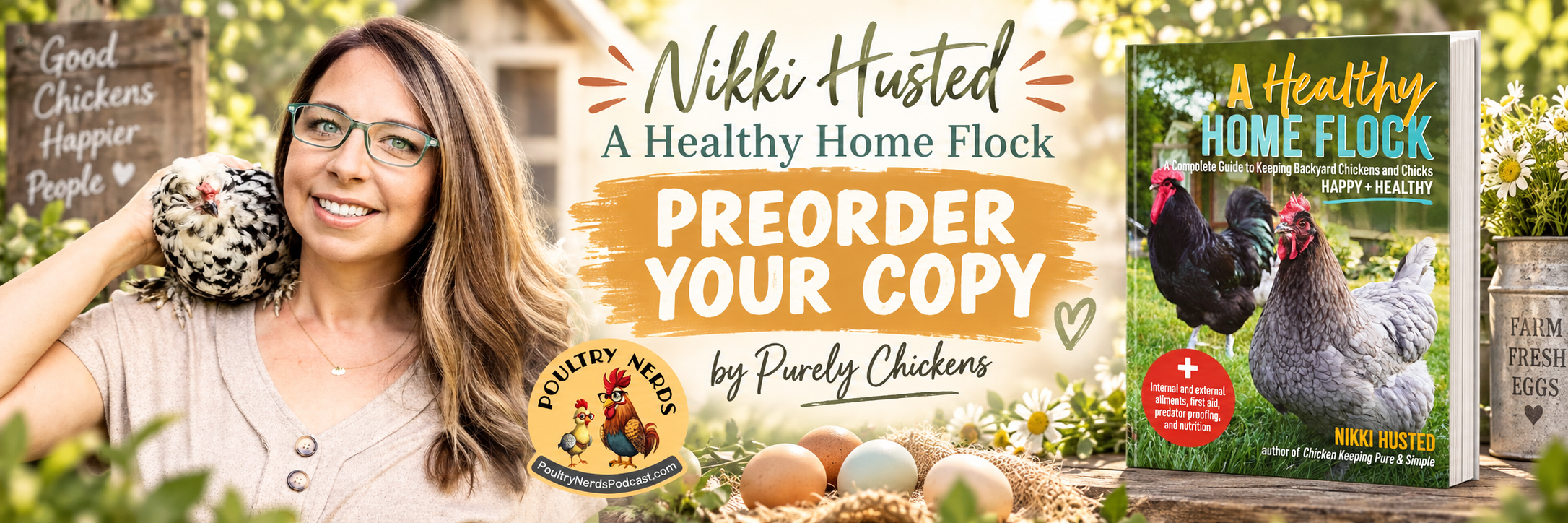
Get your copy of Nikki Husted’s new book on amazon
Six Hens or Sixty?
Flock size changes everything. A charming coop for six backyard hens can be completely impractical for a larger flock.
I raise Bresse chickens, Coturnix quail, button quail, and Bourbon Red turkeys, and each has its own housing needs. Even among chickens, breed and body size matter. Bantams need different accommodations than large, heavy-bodied birds, and roosts, nest boxes, feeders, waterers, and floor space all follow from that.
Management style matters too. Are your birds confined to a run most of the day, or do they roam? Do you raise chicks seasonally? Do you need to separate breeding groups or house birds of different ages?
Start with the birds you’re keeping and how you plan to manage them. Then design the coop around that. Not the other way around.
If chicks are part of your plan, think beyond the adult coop. Our brooder design guide looks at space, airflow, and heat that adjust as chicks grow.

The Part Nobody Talks About: You Have to Clean It
This is where I have my strongest opinions. I don’t care if a coop looks like a miniature Victorian mansion. If I can’t easily get inside and clean it, I’m not interested.
Plans tend to focus on how a coop will look. Not enough of them ask how it will feel to maintain. Before you build, ask yourself:
Can you stand up inside it—or reach every area comfortably from outside?
Can you reach the corners without crawling?
Can you clear out bedding without an hour of scooping through a tiny door?
Can you collect eggs comfortably?
Can you reach feeders and waterers without stepping over obstacles?
What happens when something breaks?
Will this still work for you in five or ten years?
Our bodies aren’t all the same. Height, strength, balance, and mobility all affect how practical a coop is. A design that suits a tall, athletic person may be miserable for someone who struggles with bending or climbing. Neither is doing anything wrong. They just need different coops.
It’s also worth planning for the days when you’re tired, sick, or busy.
If a coop is hard to maintain, maintenance gets postponed. Eventually, that becomes the chickens’ problem.
What I’d Ask Before Picking a Paint Color
How many birds will you keep? Not just today. Chicken math has a way of changing the plan.
Which breeds? Large breeds, bantams, and very active birds need different accommodations.
What’s your climate like? Heat, humidity, rainfall, drainage, and seasonal extremes all count.
How much time can you realistically give to maintenance? There’s no prize for building a system that demands more work than you want to do.
What can you comfortably manage physically? Door sizes, floor heights, removable equipment, and cleaning access make a huge difference.
How will you protect the birds? Predator-resistant construction and secure nighttime housing should never be traded for looks.
Our episode on why predators keep showing up around poultry is a useful next step when you’re thinking about security.
Once those are settled, we can talk about the fun stuff: paint colors, flower boxes, cute signs. Beauty and practicality can share a coop. We just need the priorities in order.
There’s More Than One Right Way
Poultry keeping offers plenty of reasonable ways to reach the same goal. I might use one bedding while another breeder swears by something else. Someone’s clever egg-collection system might not fit my setup at all. That’s fine.
To be clear, flexibility has limits. Chickens still need appropriate space, clean water, good nutrition, ventilation, sanitation, and protection. But how you provide those things can fit your situation.
You do not need to keep chickens exactly like the person you follow online.
Enjoy their content and learn from their experience, but take only the ideas that fit your situation and question the ones that don’t. Don’t spend thousands of dollars on something just because it photographs well. Your chickens aren’t checking Instagram.
The Conversation That Started It
Making poultry keeping practical and personal is a big part of why I enjoyed talking with Nikki Husted. She is the author of Chicken Keeping Pure and Simple, and her new book, A Healthy Home Flock, is scheduled for release November 3, 2026. Carey and I talked with her about her experience raising chickens, her books, and the lessons she’s picked up along the way.
Her point about designing a coop for the person who actually has to maintain it resonated with me. Sometimes the most useful thing an experienced keeper can tell you isn’t what to build. It’s what to think about before you build it.
Listen to our conversation with Nikki Husted on the Poultry Nerds Podcast.
Preorder A Healthy Home Flock: Find Nikki’s book on Amazon.
Affiliate disclosure: As an Amazon Associate, we earn from qualifying purchases. This helps support the Poultry Nerds Podcast at no additional cost to you.
One Last Thought
What looks wonderful on paper doesn’t always work in real life. Sometimes you build something, use it for a season, and realize you’d like to move the door, raise the nest boxes, or rethink the whole watering system. That’s part of learning.
You don’t need anyone’s permission to design your poultry setup around your own needs. Make it safe for your birds. Make it right for your environment. Make it something you can realistically maintain.
And if you want to paint it pink and hang flower baskets from the windows, go right ahead. Just make sure you can still get inside to clean it.
— Jennifer
Poultry Nerds Podcast
For more practical setup and care topics, explore our Management & Welfare resources.
Frequently Asked Questions
Should I copy chicken coop plans from social media?
Use them for inspiration, but check the design against your climate, flock size, predator risks, and maintenance needs. A plan that works for its creator may need big changes for you.
What matters more in a coop: appearance or function?
Function comes first. Ventilation, sanitation, security, space, and ease of maintenance should guide the design. Appearance can follow once those are covered.
Do different breeds need different coop designs?
The basic husbandry needs are the same, but breed size, mobility, and activity level affect the details. Consider roost height, access, and usable space for the birds you actually keep.
What’s the most overlooked feature in coop design?
Ease of cleaning. Accessible doors, removable equipment, practical bedding management, and reachable corners make routine care far easier.
Can a coop be both beautiful and practical?
Absolutely. The goal is a coop you enjoy looking at, can comfortably maintain, and that meets your flock’s needs.
Poultry humor with a spooky side. The Flock Has Risen pairs a small Poultry Nerds chest logo with a bold Halloween-inspired back design: two wide-eyed chickens, a moonlit coop, and an orange sky full of bats.
Printed on a black Comfort Colors 1717 tee with a relaxed fit and a soft, garment-dyed finish.
• Small Poultry Nerds logo on the front; The Flock Has Risen artwork on the back
• Black, unisex Comfort Colors 1717
• 100% ring-spun cotton
• Heavyweight fabric: 6.1 oz/yd² (206.8 g/m²)
• Garment-dyed with a relaxed fit
• Twill-taped neck and shoulders
• Double-needle collar, armhole, sleeve, and bottom hems
• Sizes S–4XL
• Blank shirt sourced from Honduras
Made to order through Printful. Your shirt is printed after you order, so allow time for production as well as shipping.