Why Predators Keep Showing Up Around Poultry
A fox crossing the field, a raccoon testing a latch or a rat snake appearing in the barn can make it feel as though every wild animal on the property has suddenly decided to eat poultry.
Sometimes the chickens are the attraction.
But sometimes they are not the first thing that brought the predator close.
Poultry feed supports chickens. When it is spilled, scattered or stored where other animals can reach it, it can also support mice and rats. Those rodents become food for snakes, foxes, coyotes, skunks, opossums, hawks and owls. Once a predator is regularly hunting near the coop, eggs, chicks or adult poultry may become another available opportunity.
That creates a chain poultry keepers sometimes overlook:
Accessible feed → more rodent activity → more hunting activity → poultry becomes another possible meal
Understanding that chain changes predator management. The goal is not to eliminate every wild animal from the property. The goal is to stop providing easy food and prevent predators from gaining access to the flock.
Quick Look
Poultry feed can attract rodents when it is spilled or improperly stored.
Rodents can draw snakes, foxes, coyotes, skunks, opossums, hawks and owls closer to poultry housing.
A predator seen near the coop is not necessarily hunting chickens—but access can turn poultry into an opportunity.
Chicken wire generally keeps chickens contained; it should not be trusted as the primary barrier against determined predators.
Raccoons can reach through larger openings, while rodents and some snakes can enter surprisingly small gaps.
Hawks and owls are federally protected native migratory birds. Exclusion is the first line of defense.
Free-ranging provides behavioral benefits but cannot be made risk-free.
Secure feed, strong housing, covered runs and consistent routines reduce opportunity without requiring the removal of every predator on the property.
The Chicken May Not Be the First Attraction
Predators do not divide the landscape into “wildlife habitat” and “chicken property.” They move through overlapping territories while looking for food, shelter and travel routes.
Many common poultry predators are opportunists. They eat what is naturally available and reasonably easy to capture. Depending on the species, that may include rodents, insects, rabbits, wild birds, eggs, amphibians, carrion and occasionally domestic poultry.
A predator passing through the property does not automatically mean it is targeting the flock.
The risk changes when the animal repeatedly finds food near the poultry area—or discovers that the birds can be reached through a weak door, uncovered run or oversized opening.
Management therefore has two jobs:
Reduce the food sources that unnecessarily draw wildlife into the poultry area.
Prevent wildlife that is already present from gaining access to the birds.
Spilled Feed Changes the Local Food Web
A few scattered pellets may not look significant beside a feeder. To a mouse, they represent a dependable food supply.
Rodents are especially successful around farms because people unintentionally provide the three resources they need: food, water and shelter. Poultry areas may offer all three.
Common rodent attractions include:
Feed spilled beneath troughs
Open feed bags
Containers with loose or chewable lids
Feed left available throughout the night
Wild-bird seed near the poultry area
Pet food stored in barns
Clutter beneath or behind equipment
Leaking waterers
Eggs left in nest boxes
Gaps beneath floors and walls
The USDA Defend the Flock program recommends storing feed properly to prevent contamination by wild birds and rodents. Oregon State University Extension also recommends placing feeders at the birds’ back height to reduce spillage and storing feed in enclosed containers.
Rodent management is not only about saving feed or preventing gnawing. Wild birds and rodents can also contribute to disease exposure. Our Poultry Nerds review of the backyard chicken–wild bird disease interface explains why feed, water and shared spaces can become connections between domestic poultry and wildlife.
Rodents Can Attract Animals That Also Eat Poultry
Mice and rats are prey for many animals that live around farms.
A rat snake may enter a barn while hunting rodents. A fox may patrol the edge of a field where mice and rabbits are abundant. Hawks and owls hunt small mammals and wild birds. Skunks and opossums also consume rodents as part of varied diets.
That does not mean every animal drawn by rodents will attack poultry. It means that poorly managed feed can increase wildlife traffic near the flock.
Once an adaptable predator learns that the poultry area offers several types of food, its behavior may change. The animal that originally arrived for mice may find eggs, chicks or a bird resting against the wire.
Predator pressure is therefore not just about what lives in the county. It is also about what the poultry keeper makes available.
Remove the Invitation Before Adding Another Deterrent
Predator management often begins with a new gadget: a flashing light, noise maker, plastic owl or motion-activated device.
Those tools may provide temporary support, but they do not correct an accessible food source.
Begin with the less exciting questions:
Is feed accumulating beneath the feeder?
Can rodents enter the feed-storage container?
Is food available all night?
Are eggs collected consistently?
Are dead birds or processing waste secured immediately?
Does clutter provide rodent nesting cover?
Are water leaks creating another dependable resource?
Can wildlife eat from the same feeder as the flock?
A realistic biosecurity plan should also be sustainable. Our review of practical backyard poultry biosecurity found that recommendations are most useful when flock owners can maintain them during ordinary life—not only during a disease emergency.
Feed management works the same way. A complicated system that is abandoned after two weeks provides less protection than a simple routine followed every day.
Chicken Wire Keeps Chickens In
“Chicken wire” sounds like the obvious material for a chicken enclosure.
Its name is misleading.
The lightweight hexagonal wire is useful for containing poultry. It should not be treated as the primary barrier against a determined raccoon, dog, coyote or rat. Smaller rodents may pass through its openings, and larger animals may tear or reach through it.
Utah State University Extension recommends tightly woven hardware cloth rather than chicken wire for predator exclusion. A University of Minnesota poultry-hut guide similarly notes that chicken wire can work on upper areas while hardware cloth is more appropriate near the ground, where predators can reach the birds.
Predator-resistant housing should be evaluated as a complete system:
Strong mesh on vulnerable walls and openings
Secure attachment points that cannot be pulled loose
Small openings around vents, doors and rooflines
Latches a raccoon cannot manipulate
Protection against digging at the perimeter
A covered or enclosed top where aerial predators are a concern
No birds sleeping with their bodies pressed against accessible wire
Doors closed consistently before nocturnal predators become active
A strong wall cannot compensate for a weak latch. A secure door cannot compensate for a gap beneath it.
Raccoons Do Not Need to Enter the Coop
A raccoon may injure or kill a bird without getting its whole body inside the enclosure.
Raccoons have strong, dexterous front feet. If a bird sleeps beside wire with openings large enough to admit a paw, the raccoon may reach through and pull at the bird.
This is why mesh size and roost placement both matter. The poultry may technically be “inside,” but it is not protected if part of its body remains within reach.
The risk is especially high when birds crowd against an outer wall at night. Inspect the enclosure from the predator’s side. Look for toes, wings, heads or tails that could rest near an opening.
Hawks Require a Daytime Plan
Locking poultry inside at dusk is one of the most effective routines for reducing exposure to many ground predators.
It does not solve daytime predation.
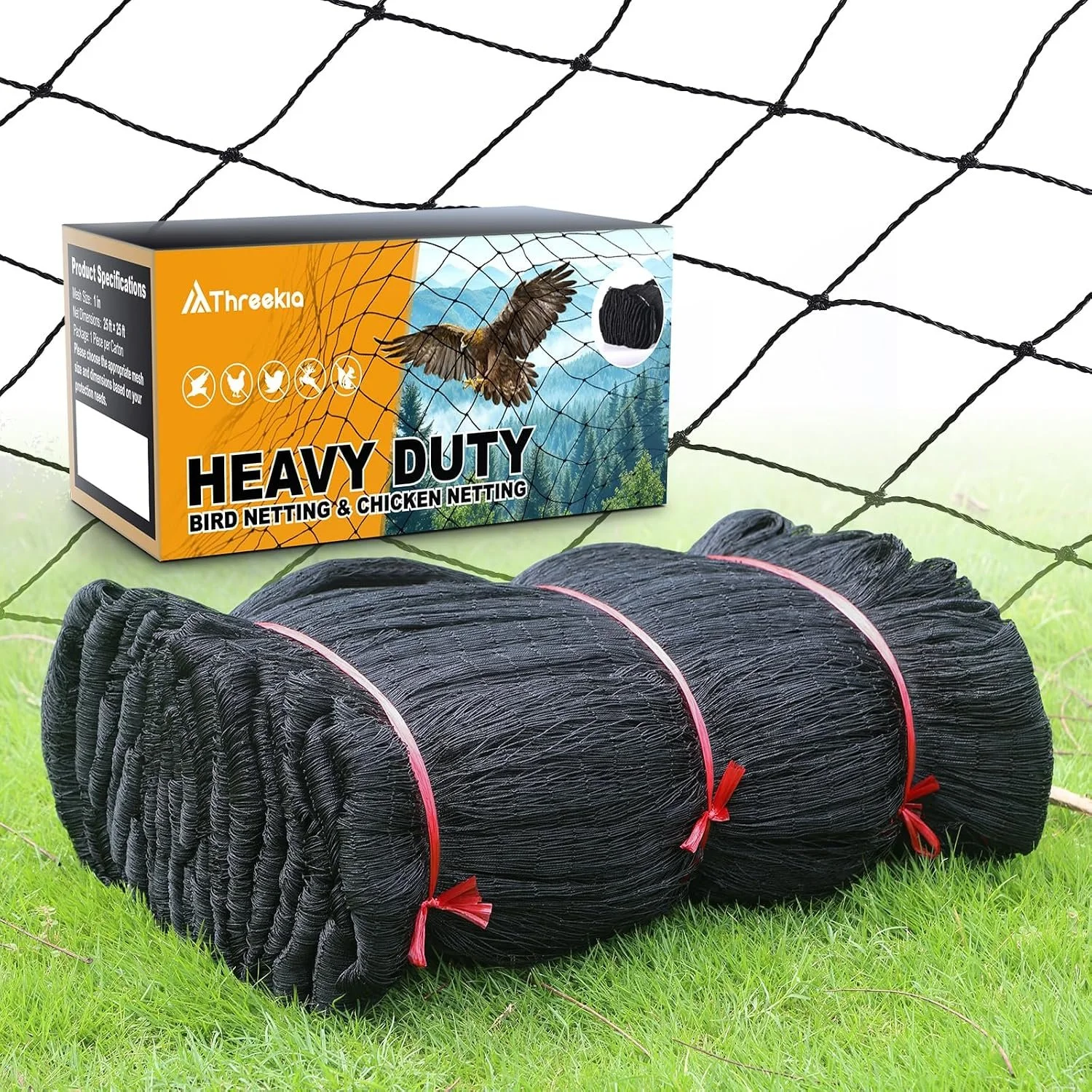
Hawks hunt during daylight, when poultry may be active in open runs or free-ranging. Covered runs, appropriate overhead netting and supervised access can reduce that risk.
The type of netting matters. Very fine or poorly tensioned material may entangle songbirds or become a maintenance problem. Jennifer replaced inexpensive lightweight nylon netting after finding wild birds caught in it. The heavier rope-style netting has lasted longer while allowing small wild birds to move through without becoming entangled in the same way.
Native hawks and owls are protected under the Migratory Bird Treaty Act. Killing or capturing protected raptors without authorization is not a poultry-management option. Use exclusion, covered runs, flock supervision and other lawful preventive practices. If a serious conflict continues, contact the appropriate state wildlife agency or USDA Wildlife Services for current guidance.
Free-Ranging Has Benefits and Risks
Free-ranging allows poultry to forage, move through a larger area and express more natural behaviors. It also removes some of the physical barriers separating the birds from wildlife.
There is no management system that provides unrestricted free-ranging with zero predator risk.
The keeper must decide what level of risk is acceptable based on:
Local predator activity
Flock size and value
Bird size and behavior
Available cover
Time of day
Season
Human supervision
Livestock guardian animals
The ability to confine birds when pressure increases
USDA guidance recognizes both sides of this decision: outdoor access offers behavioral benefits, while predation and wildlife-associated disease remain real risks.
The honest question is not whether free-ranging is universally good or bad. It is whether the keeper understands and accepts the tradeoff.
Snakes Are More Complicated Than “Good” or “Bad”
Rat snakes are excellent climbers and commonly appear around buildings while hunting rodents. The National Wildlife Federation’s rat-snake profile notes that their diet may include rodents, amphibians, young birds and bird eggs.
That explains both sides of the poultry keeper’s relationship with them.
A rat snake may reduce rodents around a barn. It may also eat hatching eggs or chicks if it gains access.
Killing every nonvenomous snake on sight may remove a rodent predator without fixing the feed and housing conditions that attracted the rodents. Ignoring a snake inside a chick brooder is equally unrealistic.
The balanced approach is:
Identify the species when it is safe to do so.
Never handle an unidentified or potentially venomous snake.
Protect eggs and young birds with properly sized mesh and sealed gaps.
Correct the rodent attraction.
Allow harmless snakes to perform their ecological role where they are not entering poultry housing.
The goal is not to label every animal a friend or an enemy. The goal is to understand what brought it there and prevent access to vulnerable birds.
Be Careful With Rodent Poison
A poisoned rodent does not always die inside the bait station. It may leave the area and become prey for a hawk, owl, fox, snake, cat or other animal.
USDA guidance warns that predators and scavengers may be poisoned indirectly after consuming rodents that have eaten rodenticide.
Rodent exclusion, feed control and appropriately placed traps should be considered before relying on poison. If a rodenticide is used, follow the product label exactly and use a tamper-resistant station designed to prevent access by poultry, pets, wildlife and children. Local extension agents or licensed pest-control professionals can help evaluate persistent infestations.
More Wildlife Habitat Can Sometimes Reduce Conflict
David Mizejewski raised another important point during our conversation: land stripped of natural vegetation may offer predators fewer wild prey opportunities.
Native plants support insects, birds and small mammals that form the base of local food webs. Maintaining natural habitat does not guarantee that a fox or hawk will ignore poultry. It may, however, give wildlife more opportunities to forage naturally instead of concentrating every food source around human structures.
This is not an argument for allowing brush to create hiding places immediately beside a chicken run. Habitat planning and coop security must work together.
The broader point is that coexistence does not require turning every acre into bare ground. Wildlife can remain part of the property while the poultry area is managed as a secure zone.
Make the Poultry the Difficult Opportunity
Jennifer manages poultry across 18 acres. Wildlife is part of the property, and removing every fox, hawk, raccoon, snake or coyote would be neither realistic nor desirable.
The working philosophy is simpler:
Do not make the poultry the easiest available meal.
That means:
Feed is protected and spillage is managed.
Rodent activity is addressed early.
Birds are secured appropriately for the time of day.
Enclosures are inspected for gaps, digging and damaged wire.
Netting is selected and maintained carefully.
Chicks and small birds receive more protection than large adults.
Predator patterns are taken seriously before losses become routine.
Predator management is not one product or one weekend project. It is a system of food management, housing, observation and daily habits.
For additional construction-focused guidance, listen to our earlier episode, How to Predator-Proof Your Chicken Coop. Housing also works best when predator resistance is considered alongside airflow, moisture and maintainability, as explained in Chicken Coop Ventilation: How to Control Moisture, Ammonia, and Wet Litter.
Listen to the Conversation With David Mizejewski
David also contributes wildlife expertise to Wild Critters USA, a family podcast series created by Orbit with PBS Nature and the National Wildlife Federation.
Predator management was only one part of our conversation with National Wildlife Federation naturalist David Mizejewski.
We also discussed carpenter bees, snakes, hawks, killdeer, native habitat, children’s connections with nature and how poultry keepers can coexist with wildlife without leaving their birds unprotected.
Frequently Asked Questions
Does owning chickens cause rats?
Chickens do not automatically cause a rat problem. Accessible feed, spilled grain, water and shelter can support rodents. Proper feed storage, reduced spillage, sanitation and exclusion make the difference.
Does chicken feed attract predators?
Feed primarily attracts animals that consume grain, including mice and rats. Those animals may then attract predators that hunt them. Some opportunistic wildlife may also consume poultry feed directly.
Will a fox keep returning after finding a chicken coop?
A predator that repeatedly finds an easy food source may return. Remove the reward, secure the remaining birds and inspect the housing for the access point. Do not assume one repair has solved every weakness.
Is chicken wire predator-proof?
No. Chicken wire is primarily designed to contain chickens. Hardware cloth or other appropriately selected heavy-gauge mesh provides better protection in vulnerable areas.
How do I protect chickens from raccoons?
Use small, strong mesh; secure doors and windows; choose latches that require more than one simple movement; prevent digging; and keep roosting birds away from openings where a raccoon can reach them.
Can I kill a hawk attacking my chickens?
Native hawks and owls are federally protected. Killing or capturing a protected bird without authorization can violate federal law. Use exclusion and lawful prevention, and consult wildlife authorities when conflicts persist.
Are snakes around a chicken coop beneficial?
Many snakes consume rodents and contribute to the local food web. Some species may also take eggs or chicks. Identify the animal, correct the rodent attraction and use appropriately sized mesh to protect vulnerable poultry.
Is free-ranging safe from predators?
Free-ranging cannot be made completely risk-free. Supervision, natural cover, guardian animals, flock size, local wildlife, time of day and the ability to confine birds all influence the level of risk.
Sources and Further Reading
Utah State University Extension: Rodents and Backyard Chickens
University of Minnesota Extension: Mobile Poultry Hut and Predator-Resistant Materials
Oregon State University Extension: Backyard Chicken Coop Design
Jennifer Bryant is a poultry educator, breeder and co-host of the Poultry Nerds Podcast. She combines animal-science education with practical experience managing chickens, quail, turkeys and waterfowl.