A chicken can scratch up an insect, enjoy a handful of greens, and come running for a treat bag. None of those moments tells you whether the bird’s whole diet is balanced. That is the useful distinction behind this week’s conversation with Jessica of Coop Cravings.
Jessica built a treat business around chickens’ omnivorous behavior. For flock keepers, her story opens a broader question: What can a treat package tell us, and what should we still ask before pouring it out?
Quick Look
Chickens can eat plant and animal feedstuffs; “omnivore” describes their biology, not a requirement that every snack contain meat.
A complete feed suited to the bird’s age and purpose should remain the dietary foundation.
Read the product’s intended use, ingredients, guaranteed analysis, feeding directions, and any cautions together. A high protein number alone does not make a treat a complete ration.
Offer treats in moderation and watch whether they displace regular feed.
If a package makes a striking health claim, look for evidence and ask what the claim actually measures.
Start with the job the bag is meant to do
First ask whether you are holding a complete feed or a treat or supplement. A complete poultry feed is formulated to supply the nutrients a particular class of bird needs. Starter, grower, and layer feeds serve different stages; laying hens need more calcium than growing birds. A treat can add interest and variety, but it does not automatically cover those needs. University of Kentucky poultry Extension explains chickens’ omnivorous diet and life-stage feeds.
This matters even when the treat contains ingredients that sound wholesome. A flock can eagerly eat something that was never intended to replace its main feed. Keep the regular ration available, with clean water, and judge a treat by the role the maker says it plays.
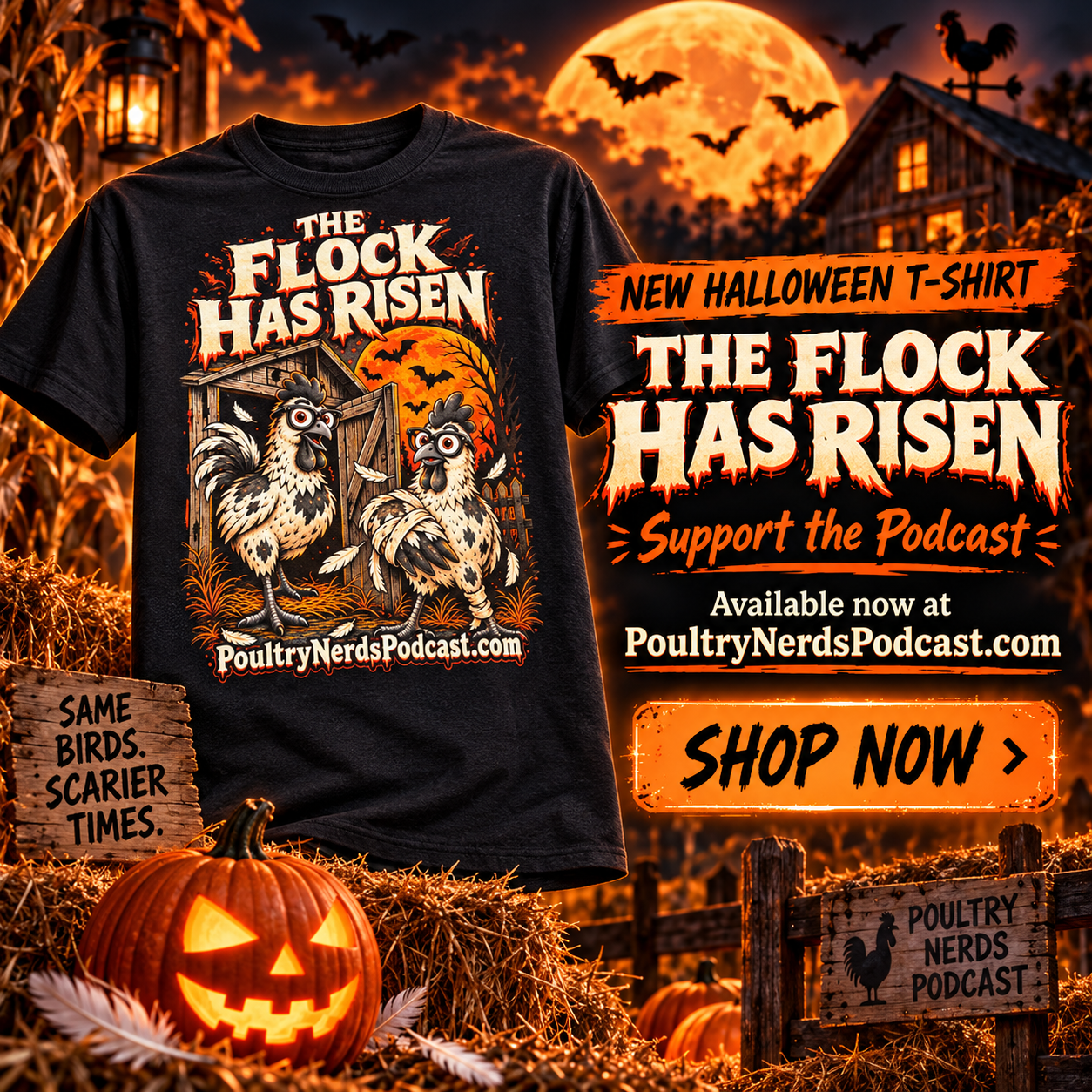
Poultry humor with a spooky side. The Flock Has Risen pairs a small Poultry Nerds chest logo with a bold Halloween-inspired back design: two wide-eyed chickens, a moonlit coop, and an orange sky full of bats.
Printed on a black Comfort Colors 1717 tee with a relaxed fit and a soft, garment-dyed finish.
• Small Poultry Nerds logo on the front; The Flock Has Risen artwork on the back
• Black, unisex Comfort Colors 1717
• 100% ring-spun cotton
• Heavyweight fabric: 6.1 oz/yd² (206.8 g/m²)
• Garment-dyed with a relaxed fit
• Twill-taped neck and shoulders
• Double-needle collar, armhole, sleeve, and bottom hems
• Sizes S–4XL
• Blank shirt sourced from Honduras
Made to order through Printful. Your shirt is printed after you order, so allow time for production as well as shipping.
Read ingredients and numbers together
The ingredient list tells you what went into the product. The guaranteed analysis tells you certain nutrient minimums or maximums. Neither one, alone, tells the whole story. The University of Kentucky’s basic poultry nutrition guide notes that crude protein percentage does not describe protein quality or the balance of essential amino acids.
That does not mean the numbers are useless. It means a “high protein” headline is a starting point for questions, not the finish line. Ask whether the product is appropriate for your birds, how much to offer, and what other feed it might replace if they fill up on it.
The questions worth asking at the shelf
What does the package call this product? “Treat,” “supplement,” and “complete feed” describe different jobs.
Who is it for? Check species, age or production stage, and any cautions.
How is it meant to be fed? Read the directions, not just the front panel. If the instructions are vague, ask the maker before making it a daily habit.
What is actually in it? Compare the ingredients and analysis with the rest of your feeding program.
What claim is being made? A pretty package or a compelling story can invite you to look closer. It is not a substitute for evidence.
For a deeper look at amino acids, life stages, and why more protein is not automatically better, read our 2026 poultry nutrition guide.
Go deeper with Incubation Masterclass
Build your hatching knowledge with the Poultry Nerds Incubation Masterclass.
Explore the Incubation Masterclasses
Treats should add something, not crowd something out
Treats can encourage natural scratching and make it easy to observe your birds up close. They can also displace balanced feed if they become the main event. University of Minnesota Extension advises moderation and says treats should not replace a balanced ration.
The most useful label-reading habit is simple: before offering a new treat, look at the whole feeding day. What are the birds already eating? Are all of them getting access to the main ration? Are they at the same life stage? That context matters more than one attractive phrase on the front of a bag.

Frequently Asked Questions
Are chickens actually omnivores? Yes. Chickens eat both plant and animal foods when they have access to them. That fact does not mean every treat must contain animal ingredients or that a balanced plant-based feed cannot be formulated for them. University of Kentucky poultry Extension explains chickens’ omnivorous diet and feeding needs.
Can a chicken treat replace regular feed? Do not assume so. Unless the product is explicitly a complete feed appropriate to your birds, treat it as an extra. University of Minnesota Extension advises that treats should never replace a balanced ration.
Does a higher crude-protein percentage mean a better treat? Not by itself. Crude protein does not tell you the amino-acid balance or whether the product suits the bird’s full diet. See the University of Kentucky nutrition guide.
What if the package makes a health or performance promise? Read the exact wording, look for supporting evidence, and consider the bird’s complete diet and condition. A product claim should not be treated as a diagnosis or a guarantee.
Go deeper with this week’s conversation
Jennifer talks with Jessica about building Coop Cravings with her mother, developing chicken treats, and learning how farm-store shelves work. The interview gives the business story; this guide gives you a way to ask better questions at the feed shelf.