The Molt: Why Are My Chickens Naked?
Feathers scattered across the coop can make a perfectly healthy flock look as though something terrible happened overnight. Then the egg basket gets lighter, the hens look ragged, and normally friendly birds suddenly do not want to be touched.
That combination is often a normal molt: the controlled loss and replacement of old feathers. It is not simply a cosmetic change. Molting is connected to seasonal light cues, reproductive activity, hormones, nutrition, and the biology of feather follicles.
The Quick Look
- Shortening day length is one of the major seasonal signals associated with a natural molt.
- Egg production commonly slows or stops while the reproductive system becomes less active and new feathers grow.
- New pin feathers are living, blood-supplied structures and can be tender or easily damaged.
- Feathers are mostly keratin, so amino-acid balance—especially methionine and cysteine—matters more than chasing the highest crude-protein number.
- A complete poultry ration, clean water, low stress, and time are the foundation of molt care.
- Feather eating can be related to nutrition, but it can also involve crowding, stress, boredom, or learned behavior. It is a clue, not a diagnosis.
What Actually Triggers a Chicken to Molt?
Natural molt is a seasonal biological program, not just a response to cold weather. In domestic chickens, decreasing photoperiod—the amount of light in each day—is an important cue. That light information is translated through the brain and pituitary into changes involving the reproductive and thyroid systems.
The result is coordinated rather than random: reproductive activity declines, egg production slows, old feathers are released, and feather follicles begin producing replacements. Research on the transcriptomic changes associated with natural molt shows that multiple tissues and hormone pathways participate in the process.
That does not mean every bird will molt on the same date or at the same speed. Breed, age, genetics, health, reproductive status, environment, and individual sensitivity to seasonal cues can all affect the timing and intensity.
Why Does Egg Production Slow or Stop?
A hen cannot maintain peak egg production and rebuild an entire coat of feathers without competing demands on her body. During molt, reproductive activity commonly decreases and the ovary and oviduct become less active. Nutrients and metabolic effort are redirected toward maintenance and feather regeneration.
This is why a drop in eggs during an otherwise normal molt is expected. The pause does not mean the hen is permanently finished laying. Production usually returns after feather replacement and reproductive activity resume, although age, daylight, body condition, and overall health influence how strongly she comes back.
If egg production falls without visible molt—or the bird also has weight loss, respiratory signs, diarrhea, parasites, or abnormal behavior—do not assume molt explains everything.
Why Pin Feathers Hurt
A mature feather is no longer living tissue, but a developing feather is different. A new pin feather grows inside a sheath and contains a blood supply while it is developing. Bending, crushing, or breaking one can hurt and may cause bleeding.
That is why even a usually affectionate chicken may avoid being picked up during a heavy molt. Reduce unnecessary handling, move calmly around the flock, and make sure birds have enough room to avoid being knocked or repeatedly mounted. Separating an overly persistent rooster can be a practical welfare step when hens are heavily covered in pin feathers.
Molt Nutrition: Think Amino Acids, Not Just “More Protein”
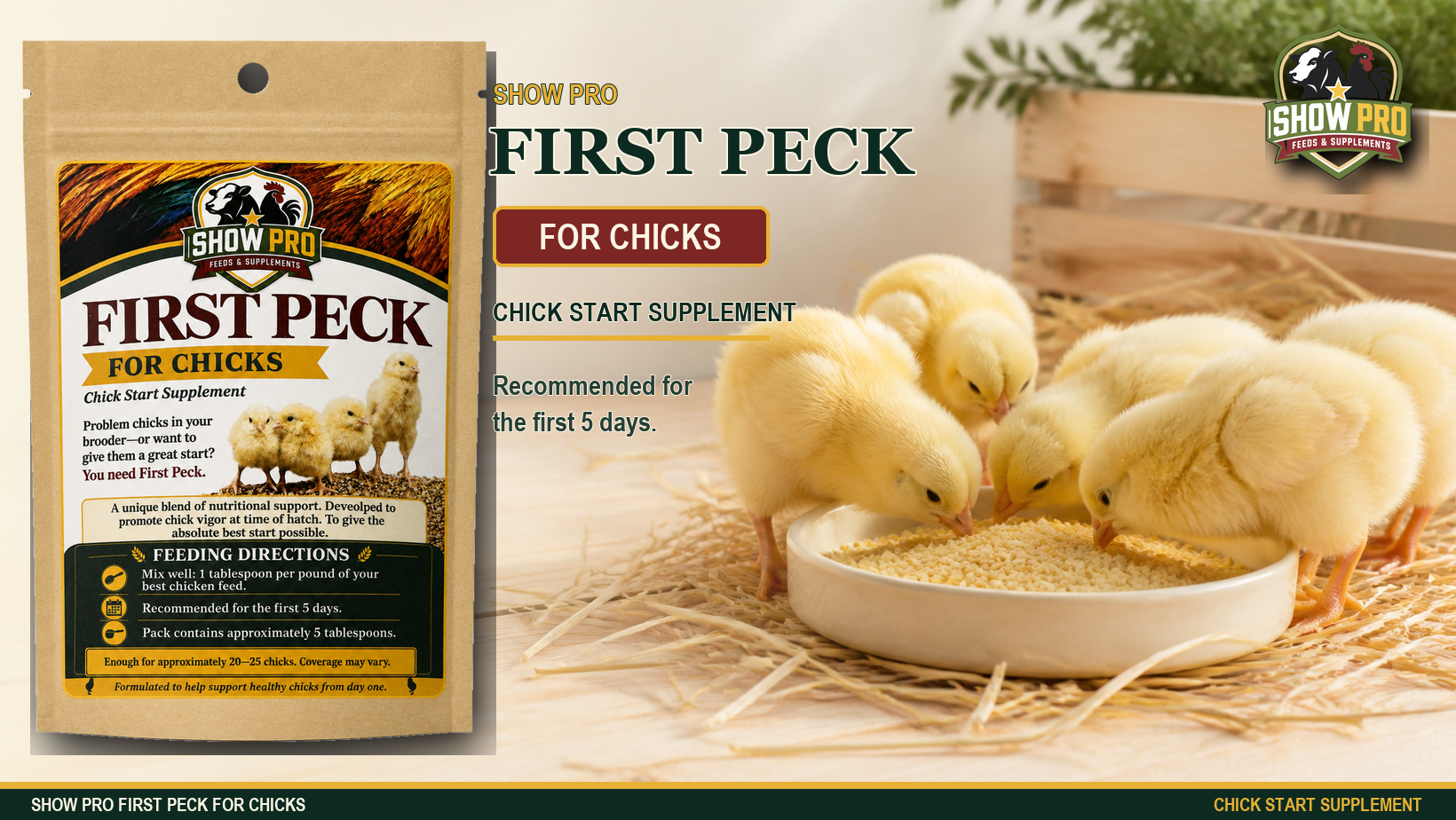
Feathers are made largely of keratin. Keratin production depends on amino acids, including the sulfur-containing amino acids methionine and cysteine. A broad review of poultry feather growth and regeneration describes how feather follicles respond to nutrition and molecular signals; research also shows that methionine participates directly in feather-follicle development.
This is where the common advice to “just feed more protein” becomes too simple. The crude-protein percentage on a feed tag does not tell you whether the amino-acid pattern is appropriate, whether the nutrients are digestible, or whether the diet is balanced for vitamins, minerals, energy, and the bird’s life stage.
The practical approach
1. Start with a fresh, complete poultry feed from a reputable manufacturer.
2. Check the feed tag rather than judging the ration only by its protein percentage.
3. Keep treats small enough that they do not dilute the complete ration.
4. Avoid trying to “fix” molt with cat food, dog food, handfuls of corn, or an assortment of unmeasured supplements.
5. If using an all-flock feed for a mixed group or nonlaying birds, offer oyster shell separately so actively laying hens can regulate additional calcium intake.
More is not automatically better. Excess nutrients can be wasted, unbalance the diet, increase nitrogen excretion, or displace something else the bird needs. A supplement may help correct a known gap, but it should be used according to its directions and alongside—not instead of—a properly formulated ration.
Should You Lower Protein to Make Chickens Molt Faster?
For an ordinary backyard flock going through a natural seasonal molt, intentionally restricting nutrients or pushing weight loss is not the default care recommendation.
Commercial induced-molt programs are a separate management subject. They have been studied as a way to pause and restart a laying cycle, and the method matters: research comparing induced programs has documented welfare and bone effects, including less bone loss with a nonfasting method than with fasting. That is not the same as supporting a hen that has entered a natural molt on her own.
For the backyard keeper, the safer objective is not to make the bird molt as hard or as fast as possible. It is to maintain a balanced diet, appropriate body condition, low stress, and normal access to feed and water while the biological cycle runs.
What About Artificial Light?
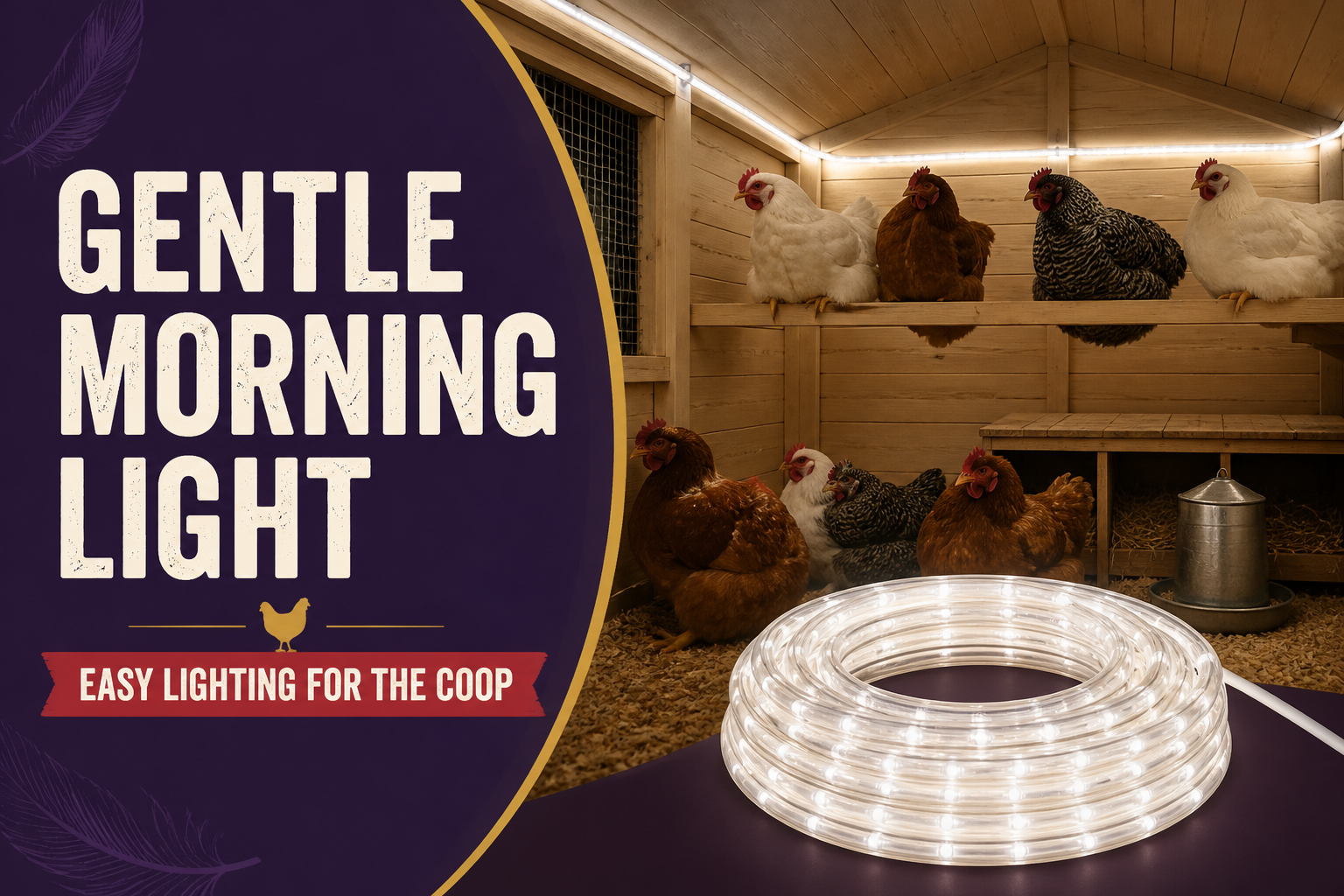
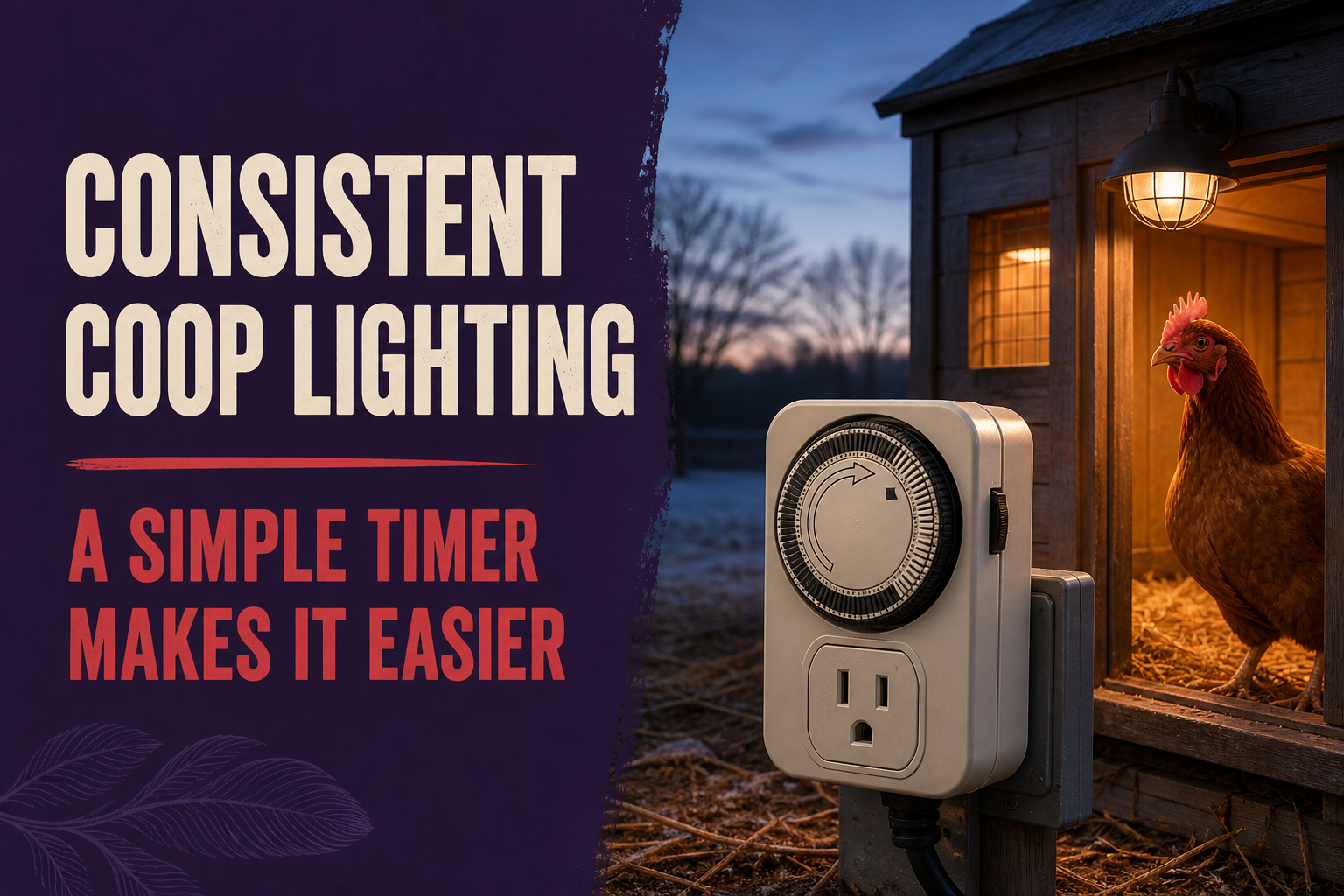
Consistent lighting can be used to support winter egg production, but it is a management choice—not an emergency cure for a bird already in a heavy molt.
If you use supplemental light, consistency matters. Many keepers add light before dawn so birds still experience a gradual natural sunset and have time to settle onto the roost. Abruptly switching the coop from bright light to darkness can leave birds away from their preferred sleeping positions.
Some keepers instead allow a natural fall molt and begin gradually increasing morning light only after the birds have replaced their feathers and recovered. Either approach should preserve a reliable dark period for rest and avoid sudden, repeated schedule changes.
Affiliate disclosure: This post contains affiliate links. I may earn a commission at no additional cost to you.
Feather Eating: A Clue, Not a Diagnosis
Feathers contain amino acids, and poor dietary balance can contribute to feather pecking or feather eating. However, seeing birds eat feathers does not prove a methionine deficiency by itself.
Also investigate:
- crowding and competition for feed or water
- high light intensity
- boredom or inadequate foraging opportunities
- external parasites
- damaged skin or exposed pin feathers
- an incomplete or heavily diluted diet
- an established behavioral habit within the flock
Look at the whole system before reaching for a single supplement.
When a “Molt” Deserves a Closer Look
Normal molt can look dramatic, but it should not become a blanket explanation for every case of feather loss. Check more closely when you see bald areas without new pin feathers, broken or chewed feathers, inflamed skin, scabs, persistent scratching, parasites, lethargy, significant weight loss, respiratory signs, diarrhea, or one bird deteriorating while the rest of the flock looks normal.
Feather loss can also result from mating damage, pecking, nutritional imbalance, parasites, illness, friction against housing, or a combination of problems.
Frequently Asked Questions
How long does a chicken molt last?
There is no single normal duration. Some chickens replace feathers quickly and look rough for only a few weeks; others molt gradually over several months. Breed, age, genetics, nutrition, health, and the intensity of the molt all matter.
Do chickens run a fever while molting?
A chicken’s normal body temperature is already much higher than a human’s—commonly around 105°F. A temperature in that range is not, by itself, evidence of a molting fever. Judge illness by the whole bird and seek veterinary guidance when clinical signs accompany an abnormal temperature.
Should I pick up a molting chicken?
Avoid unnecessary handling during a heavy molt. If you must examine or move the bird, support the body gently and avoid pressing on clusters of new pin feathers.
Should I feed cat food for extra protein?
No. Cat food is formulated for cats, not chickens. It can distort the balance of the poultry ration and is not a precise way to provide the amino acids, vitamins, minerals, and energy a molting bird needs.
Is all-flock feed appropriate during molt?
It can be, provided it is a complete ration suitable for the birds in your flock. Actively laying hens using an all-flock ration should have free-choice oyster shell available for additional calcium.
Why is my chicken eating feathers?
Nutrition may be involved, but feather eating can also reflect crowding, stress, high light, boredom, parasites, skin damage, or learned behavior. Treat it as a reason to inspect the diet and the environment—not proof of one specific deficiency.
Listen and Dig Deeper
In The Molt: Why Are My Chickens Naked?, Jennifer and Carey talk through what molt looks like in a real flock, lighting choices, handling, feed decisions, supplements, roosters, feather eating, and the practical routines they use during the season.
For the research behind this article and other poultry questions, visit the Poultry Nerds Research Library.
Related Poultry Nerds reading
- The 2026 Poultry Nutrition Update: What Chicken and Quail Keepers Need to Know
- Poultry Heat Stress: Myths, Science, and Practical Ways to Keep Your Flock Cool
- Dangerous Homemade Chicken Remedies: When Good Intentions Can Harm Your Flock
Tools mentioned in the episode
- First Peck Chick Start Supplement
- Outdoor waterproof mechanical timer
- 100-foot outdoor LED rope lights
As an Amazon Associate, I earn from qualifying purchases.
Sources and Further Reading
- Molecular Signaling and Nutritional Regulation in Poultry Feather Growth and Regeneration
- The Transcriptomic Blueprint of Molt in Roosters
- Methionine and Feather-Follicle Development
- Amino Acid Requirements for Laying Hens
- Seasonality of Prolactin in Birds and Mammals