Chicken Incubation Masterclass
Stop guessing your way through incubation.
Learn how the breeder flock, hatching egg, incubator, developing embryo, and hatch work together—so you can make safer decisions, understand disappointing results, and build a process that improves from one hatch to the next.
51 text and video lessons
14 practical resources
Lifetime access
One payment • Lifetime access • Start immediately
You do not need another unexplained humidity number
But an incubator setting cannot tell you whether:
The eggs were suitable for setting.
The breeder flock, storage conditions, or shipping affected development.
The machine’s display matches the conditions at egg level.
A clear egg was infertile or experienced very early embryo loss.
A hatch problem began early, during incubation, at lockdown, or during hatch.
One unusual egg represents a real batch-wide pattern.
When every symptom leads to a different tip, forum answer, or setting change, it becomes almost impossible to know what helped—or what made the problem worse.
The Chicken Incubation Masterclass gives you a complete framework for evaluating the whole process instead.
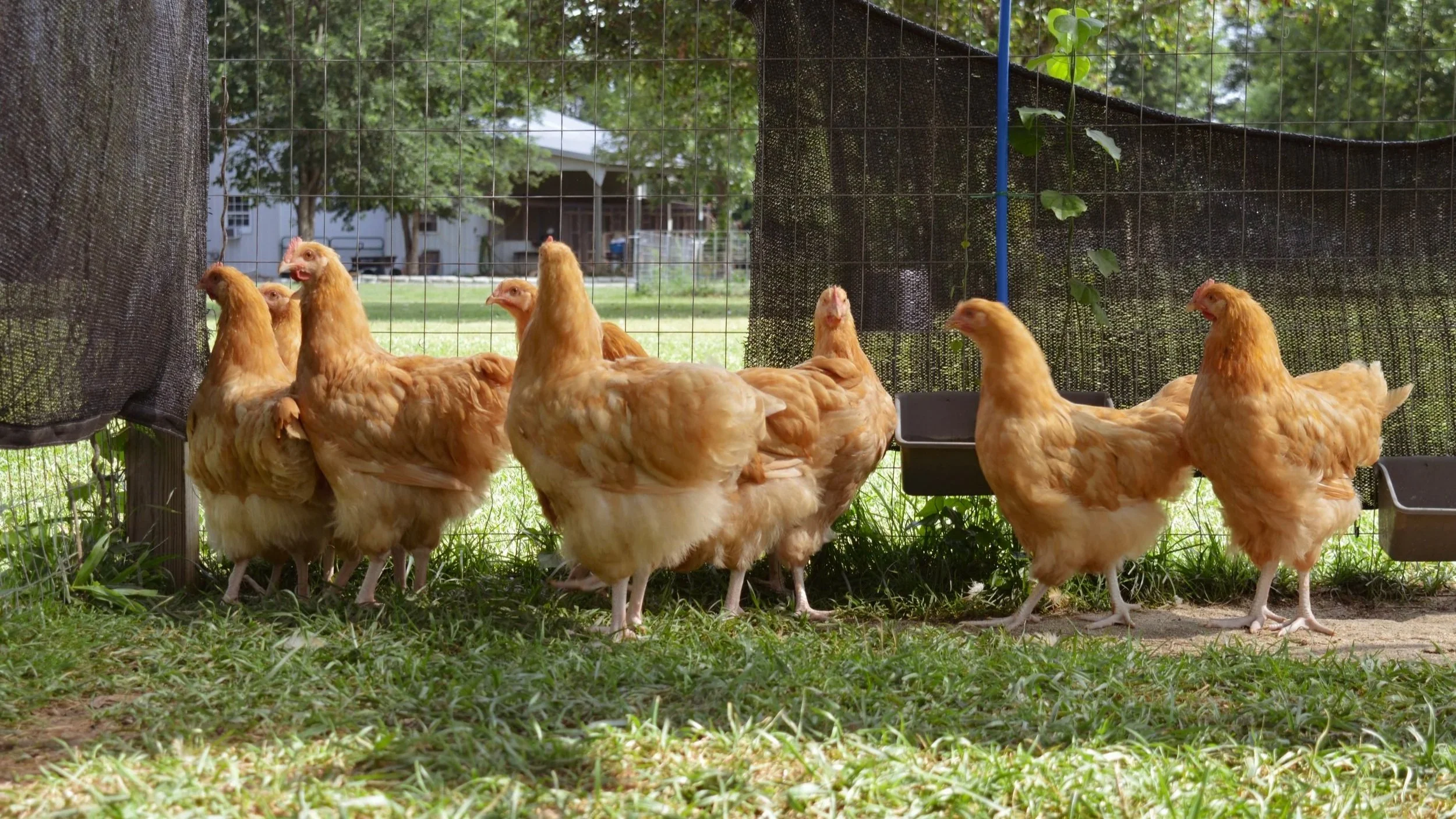
Build a hatch process you can explain and repeat
By the end of the masterclass, you will be able to:
Prepare and select hatching eggs more intentionally.
Calibrate and test an incubator instead of assuming its display is correct.
Manage temperature, moisture loss, ventilation, and turning as an interacting system.
Candle with a defined purpose and understand the limits of what you can see.
Recognize normal development, lockdown, pipping, and hatch behavior.
Understand why premature hatch assistance can cause harm.
Separate fertility, hatchability, embryo mortality, and chick-quality measurements.
Examine unhatched eggs systematically after the hatch window has ended.
Identify meaningful patterns across a batch instead of reacting to one dramatic egg.
Create a written, flock-specific incubation plan and make one justified change at a time.
Lifetime access to the complete digital course.
This course is for you if…
You are preparing to incubate your first chicken eggs and want to begin with a sound process.
You have hatched before, but your results feel inconsistent or difficult to explain.
You are overwhelmed by conflicting online advice.
You want to understand why a recommendation matters before changing your incubator.
You breed chickens and want records that help you compare flocks, lines, egg sources, or incubators.
You work with shipped eggs, bantams, dark shells, unusually large eggs, or abnormal air cells.
You want evidence-informed guidance that is honest about uncertainty and biological variation.
This course may not be right for you if…
You want a guaranteed hatch percentage.
You only want a one-page chart with universal settings and no explanation.
You are looking for encouragement to intervene routinely during hatch.
You do not want to record or compare what happens from one batch to the next.
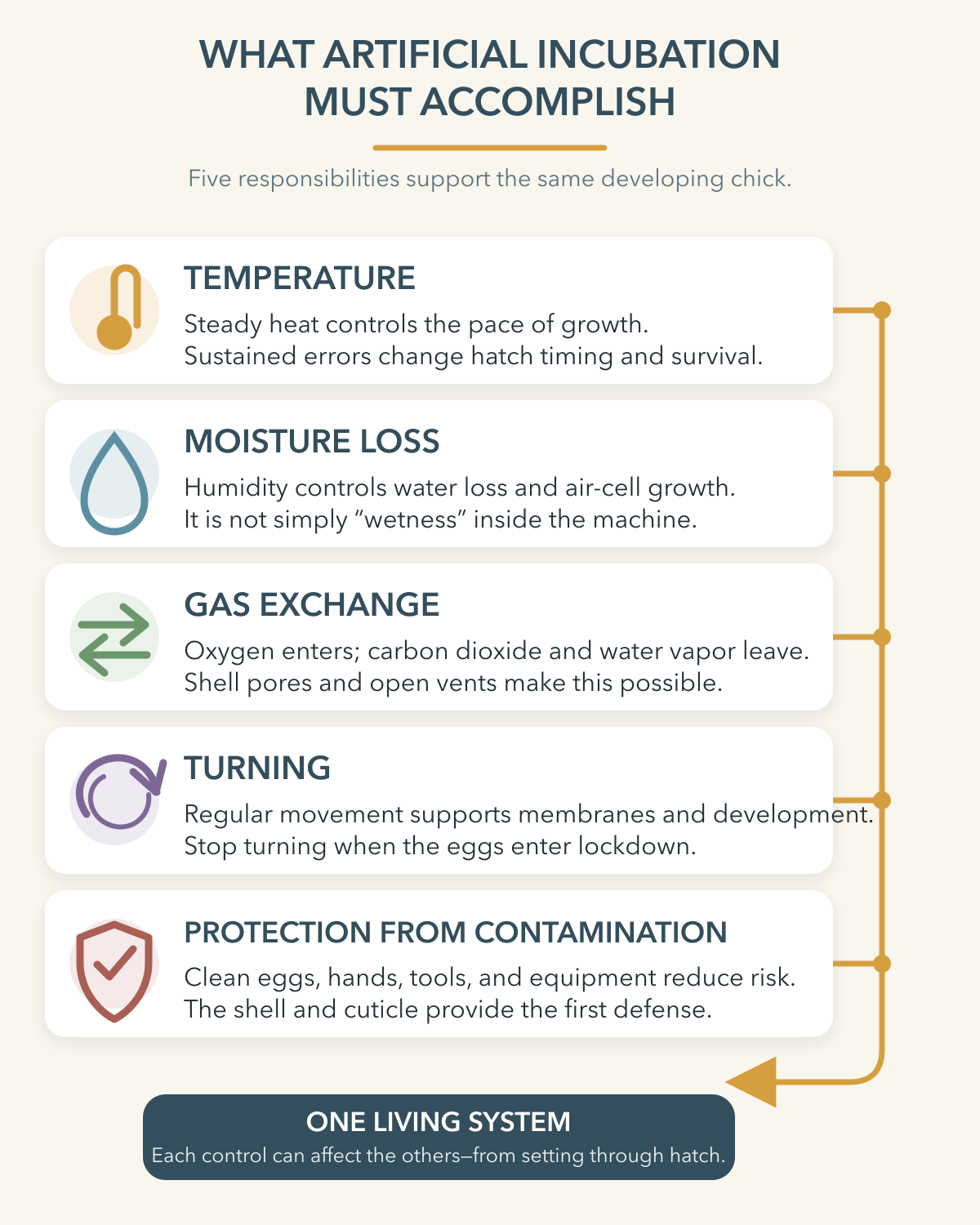
Actual graphic from the Chicken Incubation Masterclass
What makes this masterclass different
It begins before Day 1
The egg is built by the breeder flock. The course connects fertility, breeder nutrition, egg formation, shell quality, collection, storage, sanitation, and shipping with what happens later in the incubator.
It teaches a connected system
Temperature, moisture loss, ventilation, turning, egg characteristics, embryo development, and hatch management interact. You will learn to evaluate them together rather than chase one isolated number.
It distinguishes evidence from folklore
Published research, university guidance, manufacturer instructions, and breeder practice are not treated as equally strong evidence. Limitations and uncertainty are made visible.
It helps you diagnose patterns—not stories
One unusual egg cannot diagnose an entire hatch. You will learn to use developmental stage, batch patterns, records, and the correct measurements before deciding what to change.
It emphasizes safer observation
More handling is not automatically better care. The course teaches purposeful candling, stable hatch management, the normal pauses of hatch, and the boundaries and risks of assistance.
Inside the Chicken Incubation Masterclass
-
Learn what artificial incubation must accomplish, how hens form eggs, how breeder nutrition affects hatching-egg quality, how egg structures support development, and how to choose, calibrate, and test an incubator. Includes the special considerations of shipped eggs.
-
Build better conditions before Day 1 through egg selection, collection, handling, storage, sanitation, and useful hatch records.
-
Understand temperature, humidity and egg water loss, ventilation, turning, candling, lockdown, normal hatch behavior, hatch-day management, and the risks and boundaries of assistance.
-
Apply the foundations to large-fowl chickens, bantams, large eggs, dark or tinted shells, damaged or abnormal air cells, and differences among breeds, lines, and flocks.
-
Follow development from fertilization through early circulation, organ and limb formation, mid-incubation growth, hatch positioning, internal pip, lung breathing, yolk absorption, and emergence.
-
Use a structured process to evaluate clear eggs, apparent infertility, early, middle, and late embryo mortality, failed pips, malpositions, abnormal hatch timing, chick-quality problems, contamination, and egg-breakout findings.
-
Establish a baseline, calculate and evaluate results, make evidence-based adjustments, develop breed and flock records, and leave with a final written incubation plan.
51 lessons in total, presented through text and video.
Practical resources you can use with your own hatches
Your lifetime access includes 14 course resources:
Chicken Incubation Quick-Start Guide
Incubator Calibration Checklist
Pre-Set Checklist
Chicken Hatch Record
Egg-Weight and Water-Loss Calculator
Candling Reference
Chicken Embryology Timeline
Lockdown Checklist
Normal Hatch Sequence Guide
Hatch-Troubleshooting Worksheet
Egg Breakout Record
Final Incubation Plan
Sources and Further Reading
Glossary
These are not decorative bonuses. They are tools designed to help you apply the course, document what happened, and make future decisions from better information.
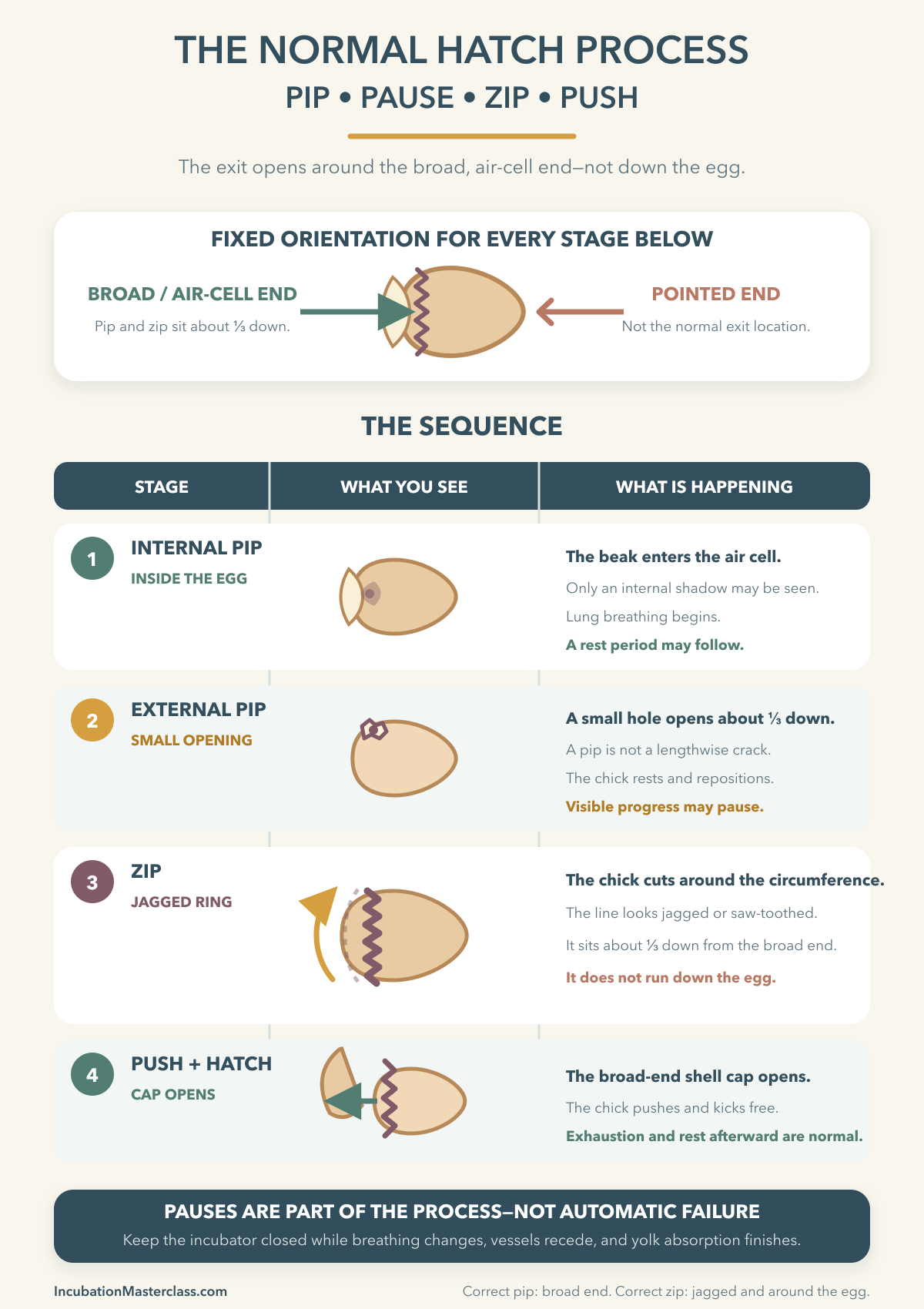
Actual graphic from the Chicken Incubation Masterclass

Meet your instructors
Jennifer Bryant
Jennifer Bryant holds a Bachelor of Science in Animal Science from Middle Tennessee State University and has completed advanced training in incubation through UNC. She is the owner of Bryant’s Roost and Eggfoam.com, a Middle Tennessee poultry breeder, educator, exhibitor, and small-business owner.
Her work centers on poultry breeding, hatching eggs, artificial incubation, shipping, brooding, breeder selection, and practical education. She also co-hosts the Poultry Nerds Podcast, where poultry care, health, breeding, housing, and management are discussed with other keepers and specialists.
This course combines hands-on experience, questions repeatedly asked in poultry communities, structured hatch analysis, and research learners can review for themselves.

Carey Blackmon
Carey Blackmon is the owner of Show Pro Farm Supply, co-host of the Poultry Nerds Podcast, and a student of poultry nutrition.
His work brings him into regular contact with poultry keepers, breeders, exhibitors, and farm-supply customers. That experience—combined with his study of how nutrition affects the breeder flock, egg formation, and developing chick—gives him a practical perspective on the factors that influence incubation before an egg ever enters the machine.
On the Poultry Nerds Podcast, Carey helps turn complicated poultry topics into useful, understandable conversations. In this masterclass, he brings that same straightforward approach to chicken incubation—helping you understand how the entire process fits together instead of relying on unexplained numbers or one-size-fits-all advice.
What responsible success looks like
No responsible incubation course can promise that every fertile egg will become a healthy chick.
Success means you can:
Prepare the flock, eggs, and equipment intentionally.
Measure rather than assume.
Follow a written plan.
Protect embryos from unnecessary disturbance.
Recognize normal development and hatch behavior.
Document losses honestly.
Compare similar batches using the correct numbers.
Make one justified change instead of several guesses.
Improve the safety and repeatability of your program over time.
That is the standard this masterclass is designed to help you reach.
Start building a more informed incubation program today
Chicken Incubation Masterclass
$35 one-time payment
You receive:
51 text and video lessons
Seven complete learning modules
14 downloadable and practical resources
Instant access to the digital course
Lifetime course access
Access anytime through your course member account.
No subscription. The course is open now.
Important purchase information
Because this is a digital course with immediate access to the complete educational content and downloadable materials, purchases are final and non-refundable. Please review the curriculum, course boundaries, and FAQs before enrolling.

Frequently Asked Questions
-
Yes. The course begins with the biological and mechanical foundations needed before setting eggs. It is also designed for experienced keepers who want to understand inconsistent results, evaluate hatch patterns, or build a repeatable program.
-
No. It teaches principles that can be applied across incubators while emphasizing calibration, egg-level measurement, airflow, equipment testing, and the manufacturer’s instructions for your specific machine.
-
The course explains the relevant principles and helps you build a justified plan for your flock, eggs, machine, and room conditions. It does not pretend that one unexplained number can account for differences in incubator design, egg characteristics, instrument accuracy, or local conditions.
-
No. Fertility, breeder health, egg quality, shipping, contamination, equipment, development, and normal biological variation all affect results. The course is designed to help you make safer decisions, evaluate what happened, and improve the repeatability of your process—not guarantee a hatch rate.
-
It explains the normal hatch sequence, the risks of premature intervention, and the boundaries of assistance. It does not promote routine pipping, peeling, or intervention before blood-vessel shutdown and yolk absorption are complete.
-
Yes. The course discusses vibration, impact, temperature exposure, delayed shipment, abnormal air cells, resting, setting position, and realistic expectations. Shipping history is also incorporated into record keeping and later analysis.
-
Yes. A full module addresses large-fowl chickens, bantams, large and extra-large eggs, dark and tinted shells, abnormal air cells, and differences among breeds, lines, and flocks.
-
The masterclass is a digital course containing both written and video instruction, supported by downloadable forms, checklists, references, and planning tools.
-
Your $35 purchase includes lifetime access to the course through the member account, subject to the normal operation of the course platform.
-
No. Because the complete digital course and downloadable materials are made available immediately, purchases are final and non-refundable. Review the curriculum and course description before purchasing.
-
No. The course is educational. It does not replace veterinary diagnosis, laboratory testing, professional feed formulation, or equipment-specific safety instructions.
Replace guesswork with a process you can understand.
Get immediate, lifetime access to 51 lessons and 14 practical resources designed to help you make safer incubation decisions and learn from every hatch.
One payment • No subscription • Open now