There is something satisfying about seeing a broody hen tucked into a nest box, feathers puffed, eyes narrowed, and completely committed to the job she has chosen for herself.
She looks simple. Put eggs under hen. Wait three weeks. Receive chicks.
But anyone who has managed a truly determined broody hen knows that natural incubation is not a hands-off version of artificial incubation. It is a different system entirely.
An incubator gives the poultry keeper direct control over temperature, humidity, turning, ventilation, egg selection, and hatch-day management. A broody hen manages many of those variables instinctively, but she introduces a new set of considerations: nest location, flock interference, staggered eggs, feed intake, predators, post-hatch housing, and the condition of the hen herself.
Neither method is automatically better. The right choice depends on your flock, your goals, and how much control you need.
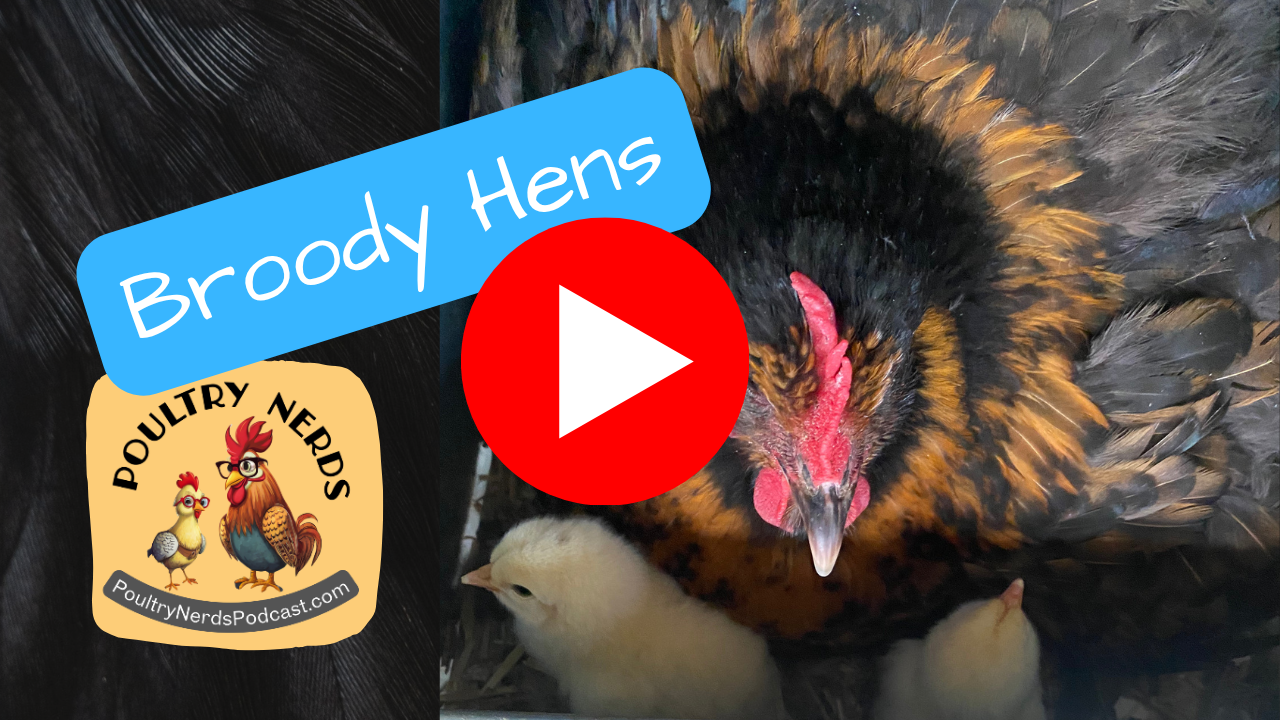
What Does It Mean When a Hen Goes Broody?
A broody hen has shifted from laying eggs to trying to hatch them.
Broodiness is not simply a hen lingering in a nest box after she lays an egg. A committed broody hen tends to remain on the nest for extended periods, flatten herself over the eggs, puff her feathers when approached, vocalize defensively, and sometimes peck when you reach beneath her. She may leave the nest only briefly to eat, drink, and defecate before returning.
The behavioral change is accompanied by a physiological shift. Broodiness is associated with increased prolactin activity, reduced ovarian function, and the temporary cessation of egg laying. Broody hens also develop a brood patch: an area of exposed, vascularized skin on the breast that improves heat transfer to the eggs. (Wikipedia)
This is one reason a broody hen cannot be treated like a living heat lamp. Her entire body has changed course from egg production to incubation and chick care.
Artificial Incubation: The Keeper Controls the Environment
An incubator is designed to simulate the conditions a hen provides naturally. It maintains warmth, manages humidity, allows airflow, and turns the eggs mechanically or manually. Stable temperature is one of the most critical variables throughout incubation. (Wikipedia)
With an incubator, the poultry keeper makes the decisions:
Which eggs go into the machine
When incubation begins
How frequently the eggs turn
How temperature and humidity are monitored
When turning stops
Whether eggs are candled
How hatch-day conditions are managed
Where chicks go after hatch
That control is valuable. You can select eggs of a consistent age and quality, start an entire clutch at one time, sanitize the machine between hatches, track air-cell development, and adjust management when something is not progressing as expected.
The tradeoff is that the machine does not think for you. If the temperature is wrong, the humidity is inappropriate, the turner fails, or ventilation is restricted, the embryos still pay the price. Temperature and humidity both affect embryo development and hatch outcome. (arXiv)
An incubator is predictable only when the operator is consistent.
A Broody Hen: Less Direct Control, More Biological Adaptation
A good broody hen performs many of the same jobs as an incubator, but she does not perform them according to a digital display.
She adjusts her posture. She shifts eggs beneath her body. She turns them. She leaves the nest briefly. She returns. She exposes the clutch to short cooling periods. She transfers warmth through her brood patch. She responds to the environment around her.
Natural incubation does not mean that every variable remains perfectly static. It means that the hen manages the clutch as a living biological system.
That adaptability can be an advantage. A competent hen is not dependent on electricity, a thermostat, or a turner motor. She can hatch eggs and raise chicks without requiring a separate brooder setup.
But the poultry keeper gives up some precision. You may not know exactly how long she was away from the nest. You cannot set a humidity percentage. You may not see a cracked egg until it has contaminated the nest. Another hen may climb into the box and add fresh eggs. The broody hen herself may choose a nest location that is inconvenient, exposed, or unsafe.
With artificial incubation, the primary management focus is the machine.
With broody-hen incubation, the primary management focus is the hen, the nest, and the flock around her.
Side-by-Side Comparison
Management FactorArtificial IncubatorBroody HenTemperatureSet and monitored by the keeperRegulated by the hen’s body and behaviorHumidityManaged through the machine and room environmentInfluenced by the hen, nest material, weather, and ambient conditionsTurningMechanical or manualPerformed instinctively by the henVentilationControlled through incubator vents and airflowDetermined by the nest environment and the hen’s movementsCooling periodsUsually limited unless intentionally managedOccur naturally when the hen leaves the nestEgg selectionFully controlled before settingMust be managed carefully to prevent newly laid eggs from accumulatingHatch timingEasier to synchronizeCan become staggered if fresh eggs are added laterChick broodingRequires a separate brooder or heat sourceUsually handled by the henCapacityLimited by incubator sizeLimited by hen size and her ability to cover the clutch evenlyMonitoringData-driven and preciseObservation-driven and less exactPower dependencyRequires a reliable electricity sourceNoneRisksEquipment failure, incorrect settings, operator errorNest abandonment, flock interference, predators, crushed eggs, poor nest placement
The Most Common Broody-Hen Mistake: Allowing New Eggs to Accumulate
A hen may choose a nest box that other hens still want to use. If those hens continue laying eggs beneath her, you can quickly end up with a mixed-age clutch.
That creates a problem.
A hen usually begins sitting tightly after a clutch has accumulated. Once incubation begins, embryo development proceeds toward a hatch approximately 21 days later for chicken eggs. (Wikipedia) If fresh eggs are added several days into incubation, those embryos will be behind the original clutch.
When the first chicks hatch, the hen may leave the nest to care for them before the younger embryos are ready. The late eggs may be abandoned.
The simple solution is to mark the intended hatching eggs with a pencil when you set the clutch. A small line or symbol around the shell makes identification easier without requiring excessive handling. Check beneath the hen daily and remove any unmarked eggs that other hens have added.
Do not rely on memory. A nest full of similar brown eggs becomes difficult to sort very quickly.
Should You Move a Broody Hen?
This is one of the most common points of debate among chicken keepers.
A hen sitting in a shared nest box may be disturbed by other hens. Eggs may be broken. New eggs may be added. After hatch, chicks can fall from elevated nest boxes or become separated from the hen.
Moving her can solve those problems.
Moving her can also cause her to abandon the nest.
Some broody hens tolerate relocation well. Others do not. If the nest is safe enough to leave temporarily, it is often reasonable to avoid unnecessary disruption during incubation and move the family after the chicks hatch.
If relocation is necessary before hatch, move the hen carefully after dark and keep the new nest quiet, dim, secure, and comfortable. Place the original nesting material and eggs with her when possible. Observe her closely afterward to confirm that she settles back onto the clutch.
The goal is not to make the nesting area attractive to you. The goal is to make it acceptable to the hen.
Moving the Hen and Chicks After Hatch
Once chicks hatch, the priorities change.
The family needs a protected ground-level area with feed and water that chicks can reach safely. The enclosure should protect them from predators, aggressive flock members, drafts, and accidental separation.
Move the hen and chicks together. Do not relocate the chicks and assume the hen will calmly follow. A broody hen may become distressed or defensive if she cannot locate them immediately.
Use a shallow waterer appropriate for chicks. Provide chick starter feed where the chicks can access it. Keep the area simple enough that you can confirm each chick is moving, eating, drinking, and returning beneath the hen for warmth.
A broody hen can provide heat and teach chicks to forage, but she does not eliminate the need for observation.
Not Every Broody Hen Should Be Allowed to Hatch Eggs
A broody hen can be useful, but broodiness is not always desirable.
You may not want chicks. The hen may be sitting on infertile eggs. She may have selected an unsafe location. The weather may be unsuitable. She may already be losing condition. Your flock may not have space for additional birds.
A broody hen often eats less while sitting and temporarily stops laying. (Wikipedia) Allowing her to remain broody indefinitely on eggs that will never hatch does not benefit her.
In that situation, it is reasonable to break broodiness promptly and humanely.
Breaking Broodiness With a Wire-Bottom Cage
The goal of a broody-breaking setup is to interrupt the warm, dark, nest-like environment that encourages the hen to continue sitting.
A common approach is a secure wire-bottom cage raised slightly off the ground so that air can circulate beneath the hen. Provide food and water, protection from weather, and enough room for her to stand comfortably. Do not provide bedding, a nest box, or a dark corner that allows her to settle back into nesting behavior.
The hen should not be exposed to predators, direct sun, excessive heat, cold stress, or rain. This is not punishment. It is a management tool intended to help her return to normal flock behavior.
Check her daily. Once she is no longer flattening herself into a nesting posture or trying to return immediately to a nest box, she can rejoin the flock. Some hens respond quickly. Others take longer.
Removing eggs frequently from nest boxes can also reduce the conditions that encourage broodiness. Egg accumulation and dark, secluded nesting spaces can help stimulate broody behavior in some hens. (Wikipedia)
Which Method Is Better?
For predictability and scale, an incubator usually wins.
You can select the exact eggs you want, hatch multiple clutches, track your settings, and repeat the process. That repeatability matters when you are breeding toward a goal, shipping hatching eggs, comparing hatch rates, or managing larger numbers of chicks.
For small flocks and low-input chick raising, a reliable broody hen can be valuable.
She incubates the eggs, responds dynamically to the clutch, and provides warmth after hatch. She may reduce the need for a separate brooder and integrate chicks into a more natural environment.
But natural does not mean risk-free. An inattentive hen, unsafe nest, mixed-age clutch, or poorly timed relocation can still compromise a hatch.
The best poultry keeper understands both systems.
An incubator requires technical management.
A broody hen requires observational management.
Final Thoughts
A broody hen is not malfunctioning. She is doing exactly what her biology is telling her to do.
Your job is to decide whether that instinct fits your current flock plan.
If you want chicks, give her a safe place to work, mark the eggs you intend to hatch, remove fresh additions daily, and plan for the family’s housing after hatch.
If you do not want chicks, remove the eggs and break the behavior humanely rather than allowing her to remain on an empty or infertile nest indefinitely.
Either way, pay attention. The hen may be managing the incubation, but she is still counting on you to manage the environment around her.
Listen to the Poultry Nerds Podcast
In this episode of the Poultry Nerds Podcast, we talk through the reality of broody hens: how to recognize true broodiness, when to let a hen hatch eggs, when to intervene, how to move a hen and her chicks safely, and how to break broodiness when a hatch is not part of the plan.
Download the printable Broody Hen Companion Guide