Why Supporting Small Agricultural Businesses Matters More Than Ever
If you've been in agriculture long enough, you've watched a lot of change happen.
The local feed mill became a regional chain. The regional chain was bought by a national company. Then the national company was acquired by an investment group. Before long, the bag of feed you're buying at the local big box store may trace back to a corporation headquartered hundreds or even thousands of miles away.
Most of us don't think about that when we're loading feed bags into the truck. We just need feed for our chickens, quail, ducks, or livestock.
But where we spend our money matters.
Watch full episode:
The Disappearing Local Feed Store
Years ago, nearly every rural community had an independent feed store. The owner knew your name. They knew what breeds you raised. If a product wasn't on the shelf, they'd often order it for you.
More importantly, they understood agriculture because they lived it.
As consolidation has occurred across agriculture, many of those locally owned businesses have disappeared. Large corporations now control significant portions of the feed, poultry, genetics, and agricultural supply industries.
While there can certainly be advantages to large-scale production, there are also downsides. Decisions are often made in boardrooms far removed from the farms and homesteads that use the products.
The person making those decisions may never have hatched a chick, raised a broiler, or worried about fertility rates during the summer heat.
Why Small Businesses Are Different
When you buy from a small agricultural business, you're often supporting someone who is actively involved in the same industry you are.
The local feed store owner may be feeding livestock themselves.
The hatchery owner may be collecting eggs every morning.
The breeder may be investing years into improving a bloodline.
The family-owned feed supplier isn't looking at a quarterly earnings report first. They're looking at customer results.
If their customers aren't successful, neither are they.
That creates a very different relationship.
Agriculture Needs More Producers, Not Fewer
One challenge facing modern agriculture is increasing consolidation.
Fewer companies control larger portions of the supply chain than ever before. Whether we're talking about feed manufacturing, poultry processing, genetics, pharmaceuticals, or retail distribution, ownership continues to become concentrated.
This can reduce competition and limit choices for producers.
Small businesses help keep innovation alive.
Many of the ideas that move agriculture forward don't originate from massive corporations. They come from farmers, breeders, feed dealers, and entrepreneurs solving real-world problems.
Every time a local business succeeds, it strengthens the agricultural community.
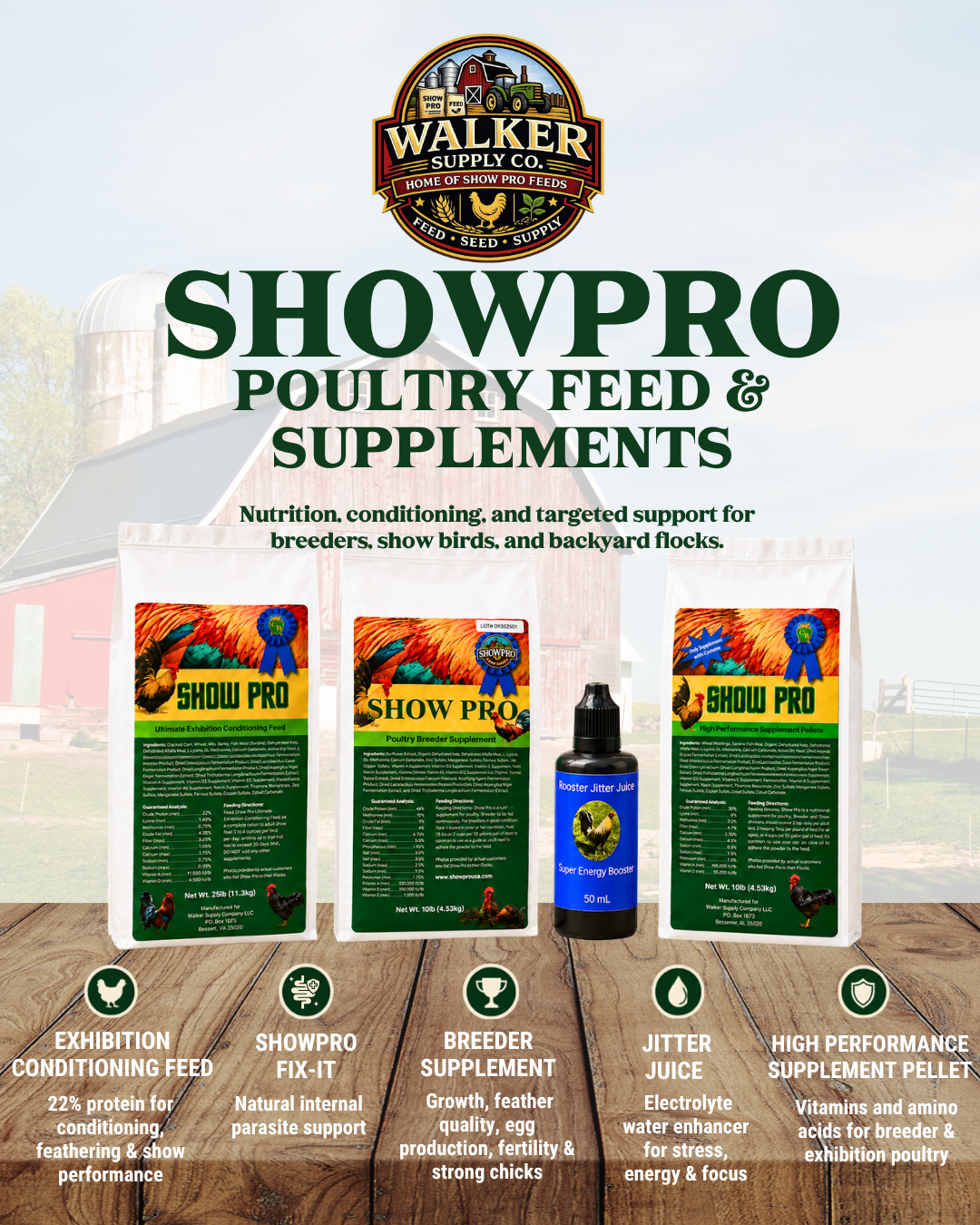
Order your supplement today
The Ripple Effect
Supporting a small business does more than help the owner.
That money often stays in the local economy.
The feed store hires local employees.
The owner sponsors youth poultry shows.
They support county fairs.
They donate to local organizations.
They buy supplies from other small businesses.
One purchase can create a ripple effect that benefits an entire community.
Why We Are Excited About ShowPro Farm Supply
This week's podcast isn't just about poultry nutrition.
It's also about what happens when someone in agriculture decides to invest in their community.
Carey Blackmon has spent years helping poultry keepers understand nutrition, feed quality, and bird performance. Now he's taking another step by opening a storefront through ShowPro Farm Supply.
Whether you're local enough to visit or simply cheering from afar, it's encouraging to see agricultural entrepreneurs building something new rather than watching another small business disappear.
Agriculture has always been built by people willing to take risks, serve their communities, and share what they've learned.
Those businesses deserve our support.
Because when small agricultural businesses thrive, agriculture itself becomes stronger.
And that's something worth feeding.
Jennifer Bryant is a poultry breeder at Bryant's Roost, co-host of the Poultry Nerds Podcast, and creator of the Incubation Masterclass. With a background in Animal Science and years of hands-on experience breeding chickens, quail, and turkeys, she is passionate about helping poultry keepers improve hatch rates, flock health, and breeding success.
Learn more at BryantsRoost.com and PoultryNerdsPodcast.com.
Carey Blackmon is the owner of ShowPro Farm Supply, co-host of the Poultry Nerds Podcast, and a longtime poultry breeder with a passion for nutrition and flock performance. Through years of hands-on experience raising poultry and helping breeders optimize feed programs, Carey focuses on practical solutions that improve bird health, growth, and productivity.
Learn more at ShowProFarmSupply.com and PoultryNerdsPodcast.com.